One of the writing prompts to my students last week: Think of something you must do. Maybe you have to do a chore. Now, put it in a sentence. For example, “I have to take out the garbage.” Make it a true sentence. Now, replace the words “have to” with “get to.” Do you see or feel a difference?
One of my fifth graders wrote this:
“I have to do the dishes. I GET to do the dishes. I have food I get to clean off the dishes. I ate food with my family last night. My dad, my stepmom, my brother and I talked and laughed and ate food and then I got to clean the food off the plates. I am really lucky because I have food to eat. I have a family to love. And I get to do the dishes.”
Readers, I’m thrilled to share my interview with Calla Devlin. We were in a San Francisco writing group together over 12 years ago. She’s worked hard at her craft, balancing marriage, children, and full-time jobs. She is a testament to staying focused and true to one’s art and she shares her lessons here.
Kismet: First of all, I want to say, I am really looking forward to reading your novel. The book description (due out in Fall 2016) reads: Tell Me Something Real tells the story of three beautiful blond sisters who travel with their mother into Mexico so she can receive alternative cancer treatments for her leukemia, all the while remaining completely unaware that an illness far more insidious than cancer poisons their home, and that their world will shatter under the weight of an incomprehensible betrayal. I remember when we were in the Kicking Muses writing group together in San Francisco (over 12 years ago!) and here you are, on the brink of getting a novel published!
Calla Devlin: That writing group was so valuable to me. I did share several chapters of this novel with the group, and I published a few chapters as stand-alone stories in anthologies and literary journals. Writing this book was a long process. It started out as a collection of linked stories and then a book that explored the characters as adults. Ultimately, I needed to narrow the focus of the novel to a single protagonist and the events that unfolded one summer.
Kismet: Did you ever doubt yourself or get tired of the storyline? I know many writers, including myself, doubt our stories time to time. How do you get over that?
Calla Devlin: I wrote several complete drafts of this novel. Originally, it started out as a collection of linked stories with chapters told from various points-of-view–six in all. This novel changed so much with every draft and i discovered myself and my voice in the process. But it was a very labor intensive process, and when you’re balancing being a mom and working full time and writing drafts of a novel, doubting yourself is inevitable. While it was a struggle at times, I am very fortunate to have a champion of a literary agent, who encouraged me every step of the way. Also, being in writing groups also kept me motivated and committed.
Writing is a solitary and fearless act. We sit alone before the computer and dare ourselves to be original and honest with our stories. Hesitation and doubt are a part of the process, but I truly believe that each and every one of us has a story to tell, whether written or spoken. And when we are able to share our stories, it is such a gift.
Kismet: You have two beautiful daughters of your own. Are you often inspired by mother/daughter relationships?
Calla Devlin: The mother-daughter relationship is so defining and complex, and I’m inspired by the interconnectedness of that relationship. I began Tell Me Something Real before I had children, and it was just a short story. While writing it, I had had my first daughter, then I lost my mother-in-law to cancer. She was very important to me and very much a mother figure. Then I had my second daughter. Becoming a mother and grief shaped the way I approached the book, and my sympathies for the various characters evolved over time. Because I write YA, I approach the material from the daughter’s point-of-view, and the myriad ways in which daughters need their mother’s support and approval—and what happens when that is somehow compromised. Also, the novel is as much about the sister relationship as the mother-daughter relationship.
Kismet: What do you hope your readers will feel or how will they be changed after reading your work?
Calla Devlin:Tell Me Something Real is very much about resilience and a character who learns to trust herself and claim her voice. I, of course, want readers to feel connected to my characters, but I also hope readers are inspired to share their own stories.
Kismet: Tell us what your writing process is. Do you have a strict schedule and process (where, when, how do you write)?
Calla Devlin: I’ve always balanced writing with work, and also with my family. I try to carve out writing time when I can. I don’t write every day, but I’m engaged with my writing every day. I read a great deal, which I think is an essential part of my process. There are weeks when I’ll write in every spare minute, and others when I write for just a couple of days. I cherish opportunities to take writing retreats.
Kismet: You’ve been published many times in many distinguished journals. Do you have advice for writers who write for the love of it, but also hope to get published?
Calla Devlin: If you love writing, write! I feel such joy when I am immersed in a novel and connected to my characters. I encourage everyone who loves writing to do just that—write for the joy of it. There are so many excellent literary journals in print and online. I read as many as I can and I think it’s important to submit to journals that share a similar editorial vision and voice. It is about finding a home for your work, which means that the journal is kindred. If you connect with a journal, it’s great to tell the editor why you’re submitting there and how you see your work being consistent with their publication. It requires reading and research, but the process is a wonderful one.
I had the very good fortune of interviewing Leonard Chang.
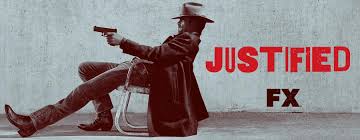
Award-winning author of several novels, FX’s “Justified” TV Show writer and his most recent autobiography, Triplines, he shared his writing process and advice for other writers. He is currently at work on another novel, The Lockpicker, due out in 2016.
What inspires you and what is your writing process when writing novels?
Perhaps this might be a circular answer, but writing actually inspires me. When I write a scene or a story or a character that suddenly *clicks*, whether it gets at something I’ve been thinking about for a long time, or a character does something surprising and delightful to me, or any kind of confluence of the creative forces as I’m trying to make a story coalesce — when it works, I feel an incredible sense of… I don’t know, joy, or maybe even a hint of transcendence. It’s what Kafka has said, and which I’m sure I’ve talked about before: for the him writing was the axe breaking the frozen sea within us. Of course not all writing does that — and getting to that place is arduous, painstaking work, but when it happens I feel like all the pain was worthwhile, and I want to keep doing it…
My writing process for my novels is very, very simple. I get up early and I write a few pages a day, and then do other things until the next morning. The pages accumulate over time, and then I rewrite these pages over and over, sometimes starting over from scratch. I keep doing this until the novel is finished — it can take years. I’m not being facetious — it really is this grueling. It’s all about stamina.
How did you get into writing for a TV series? Was it something you’ve dreamed of doing? What would you advise wanna be TV series writers to do?
I’ve never dreamed of writing for a TV series, but certainly have dreamed of being able to write all the time, which is essentially what I’ve been doing since I became a professional writer. For me, writing TV is just another kind of writing. It all comes from the same place. And I got into TV writing the same way I got into novel writing. For novels, when I read everything I could and found I wanted more, I began writing books for myself. For TV I watched shows like The Sopranos and The Wire, and hungered for more, so began trying to create my own shows. However in TV there’s a lot more to the business that just writing, and I needed to understand all facets of TV production, which is why I had to begin staffing on other shows to learn. I’ve been lucky to work on excellent shows with superb people. As for breaking into TV there’s no one way — every writer you meet in TV has a different story about how they broke in. Often it’s through a mentor, through a lower level writing assistant job, through the TV writing programs, or through a different medium (film, novels, plays, etc). My only general piece of advice is at the very base level of all of these is being a great writer, so that’s the factor you can control. You need to write so well that everyone who reads your work will feel like they’re missing out if they don’t ally themselves with you.
Describe a typical day at work for “Justified.”
“Justified” has ended (we aired our season finale a couple months back) but for me a typical day looked like this: I would get into the office at around 5:30 AM. I would spend a couple hours writing various things, sometimes Justified scripts, sometimes other things. I’d then watch the previous day’s “dailies” — the footage shot yesterday. I’d read through yesterday’s writers’ room notes, think about the issues we’d be talking about that day. The writers’ room would start around 10:00AM, and I along with eight or nine other writers would continue “breaking” a new episode — basically discussing at length the current story and state of the characters, laying things out on a whiteboard — and then we’d finish around 6:00PM. I’d then do a little more work, and then go to the gym. I’d get home by 8:00-ish and spend time with my partner (she is also a writer but works at home) and we might watch TV and hang out, and then I’d pretty much crash by 10:00PM. All this changes if we’re shooting an episode I wrote, since our writers were always on set for our scripts — those were long days and nights.
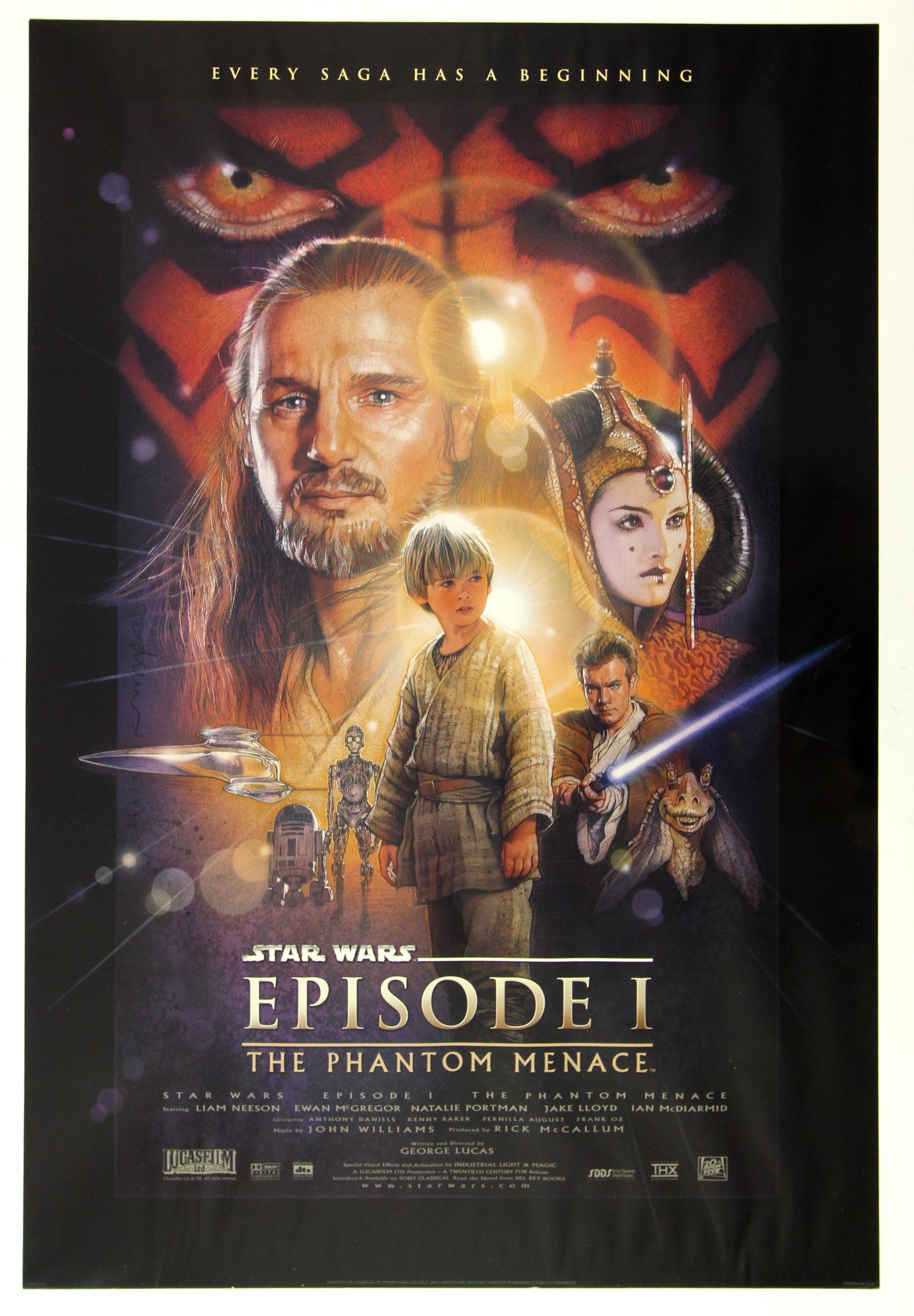
I taped it to the wall near my desk. I’m not even a hard core Star Wars fan, but I taped it to remind me of something: even the best make mistakes. Yes, it made $924,317,558 at the box office. It was a hit, if you consider only the money it brought in. But in terms of quality – critical success – it bombed. It was the fourth film in the Star Wars series, so one can’t make the rookie argument.
Some critiques from reputable sources:
“Part two now focuses on the second biggest problem with the Phantom Menace, the story. The mystery plot lacking direction and emotional involvement was really the other big problem. No tension, no drama, no stakes. Characters aimlessly follow along the events.” – SlashFilm.com
As a writer, you have to decide whether you’re writing for the craft or for views/sales/tawdry attention.
Just came home from a long weekend trip to Mexico (Rocky Point). Knowing it would be a busy one, (hanging out with my family, a friend and her wedding party), I was realistic in packing books. I packed just one. This one:
Lots of great tips from one of the pioneer writers of writing practice, Natalie Goldberg. I wanted to share one that resonated with me.
When you work on a story, make the structure your own. That is, don’t feel confined by an outline or drafting device you learned in school or in a workshop, but make the structure yourself and fill it with wildness! Natalie Goldberg grew up with very little structure, but learned about self-discipline and “harnessing the mind” through meditation practice. Goldberg cites friend and fellow writer Kate Green’s technique for writing Shattered Moon (Edgar Allen Poe award winner) this way (p. 50):
She decided the novel would have thirty chapters; there had to be action in each chapter, and she would set it up so that when readers came to the end of the chapter, they’d want to go on to the next.
It sounds mechanical, but Kate explains that she actually does a lot of writing practice, journaling, sketching ideas, scenes, and research in a notebook, planning it out anywhere between three months to a year before she sits down to write it.
Finally, as a single mom of three children and a working mom (teacher), she addresses the time issue. “Time to write is just that. An hour here, a half hour there. Go. Move pen. That’s it. The rest is all bullshit and I know it but I get caught up in it and create a lot of suffering around not writing. Writing itself is pretty simple. Just do it.”
I don’t have a spotlight writer this go ’round, but I thought I’d share with you an article about the writing spaces of famous writers. As a writer (on and off for the past 20 years), I’ve learned what works for me best and what doesn’t. I’ve come out of the denial that simply sitting at my computer for several hours, surfing the Net and writing a few lines does not make me productive. I definitely (and sadly) work best when I’m at a desk with no view, a notebook in front of me and pen in hand. When I write on my laptop, I am too easily distracted. This week, I invite you to make an assessment – an honest one. Define the absolute necessities for being the productive you.
Are you a writer, wondering how to get published? Feel hopeless? I have a treat for you! Lisa Alber is a writer with many tips and words of encouragement.
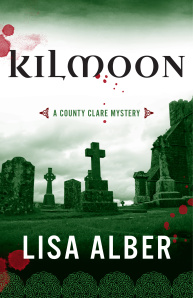
I met Lisa at my husband’s high school reunion over a decade ago. We shared a common passion for writing. She published her first novel, KILMOON, last year, and I’m thrilled to share that just two days before I interviewed her for this Kismet issue, she signed a two-book publishing deal! Lisa also secured a new literary agent. Her experiences and advice follow in Q&A format:
Lisa Alber
If I met you at a party and asked you, “What do you do?” how would you answer?
I would probably start off by saying, “I’m a writer.” I’d give them the big picture answer because I’ve always been a writer—it’s just who I am by temperament. Writing novels is a part of that, but so is journaling and blogging and day-job technical writing.
If we kept talking then I’d say my debut novel came out last year and tell them about it if they showed interest. People often get excited when I mention the novels – there’s a kind of perceived glamour there, I think.
How long have you been writing?
I’ve always been a words-oriented person. Even as a kid it was pretty obvious that I wasn’t going to be a math whiz. So I’ve essentially always been writing. I started to pursue writing as a craft in my 20s when I attended my first workshops.
The turning point came when I got laid off in 2000. I remember it vividly: I thought, Now’s the time to see if I really AM a writer like I think I am. And by that I meant, could I sit down every day and treat it like a job? I was lucky because I had a simple and cheap lifestyle.
Lo and behold, I could sit down to write every day! I wrote my first novel during that time. I call that novel my “drawer novel” now, hah!
How do you balance a day job and writing?
Good question! I don’t?
Seriously, I’m not sure. I’m pretty lazy by nature, but when I have a deadline I also get anxious, and then the anxiety overrides the laziness. Truthfully, I might not have great balance in my life right now. We have to make choices, right? And right now I’m choosing to have a second job, which is novelist, over other hobbies, a rockin’ social life, and sometimes, sleep.
That’s my choice, just like I recently chose to become a first-time home buyer (yay! I love my house!). I dream of quitting my day job, but having a mortgage means I can’t do that as easily, which means that much more work for that much longer.
Don’t we always wrestle with choices that pull us in separate directions? Buy a house or potentially quit job quicker for the sake of fiction? It wasn’t a slam dunk decision, but I’m so happy I have my very own house. So worth it!
What about the technical writing? Does it help or hinder your fiction writing?
Hmm … I don’t think it hinders except for the fact that I’m on the computer all day. Sometimes I can’t bear to look at the screen anymore for the day.
However, technical writing is very left-brained analytical. I think I’m a better self-editor for it. I recently cut my work-in-progress from over 100,ooo words to 82,ooo words. That’s no mean feat – requires a lot of objectivity, which can sometime be difficult for fiction writers.
There’s a saying: You gotta kill your darlings. So true!
You recently published Kilmoon to great critical and popular acclaim. Congratulations! Can you tell us about how the story took shape in your mind, your writing process for it…how long did it take you to write it?
The drawer novel I mentioned? I was in Ireland researching that novel when I stumbled onto a few cool things that later turned out to be the seeds for Kilmoon. It took me a decade to get that novel right. I kept setting it aside and returning to it. I’d think it was complete, submit it, get rejected, and go to work on it again.
The process is long and arduous. First you have to learn your craft—like a painter, you don’t come out with a masterpiece the first time you set words to paper!—and then you have to deal with the business side of writing: book publishing.
What do you consider the most important “habits” one must adopt to be a successful writer?
Treat it like a job and show up every day. Do it even when you’re not feeling the Muse. The more you sit and work for it, the more the ideas appear. Having a habit signals your subconscious that it can come out and play now. The habit of writing takes as much practice as any other part of the process. Persistence is a huge factor too.
Any tips for unpublished writers? How do you get attention? It used to be that writers needed to get published in literary journals. Do you recommend this?
Everyone’s trying to figure out how to gain visibility. There are a million and one theories about how to increase your “discoverability.” I’m slowly learning what could work for me…
Ultimately, the first thing that comes to mind is to keep writing. The more books you have out there, the more visible you become. There’s a cumulative effect.
Marketing wise, in the shorter term? I would say engage in activities that you like. For example, if you have a blog, but hate blogging, then don’t blog. Newsletters seem to be making a come back. If your writing and your personal interests overlap, you could write a fun monthly newsletter that’s not just about your novels. I have a friend who writes mysteries with a vintage-clothing-loving amateur sleuth. In real life, my friend is all about vintage – she adores it – and she has the most entertaining newsletter.
I really like your personal definition of success on the Shadowspinners site: (I feel hectic and forgetful right now, sure, but also very successful. I’m facing my terror of home ownershipand getting my writing done. I’m managing to walk my dog too. And that counts for heckuva lot too.). Can you explain how you came to this definition of success?
My current definition of success has evolved. I realized I’m a perfectionist, which isn’t the greatest thing in the world to be. It’s too black and white, and I tend to be too hard on myself. Being a perfectionist tends to orient us toward end product versus the process. However, as I get older, I’m becoming aware that it’s the process that’s really meaningful. So if I sit in front of my computer all the while moaning and groaning that I suck as a writer, but I still sit there and get some crappy, awful words down, I can call that a success.
What is the importance of a writing community/support for you? Who provides that support?
I used to be a more solitary writer than I am now, although I always had a writing group, which can be beneficial. In the last five years, I’ve really become a part of the mystery-writing community by going to conferences and getting to know people online. It would be harder to quit writing now that I have a community—it would be like quitting my family!
Publishing—the business side of writing—can be very hard. I have an older friend who’s been writing for many years, and he is thinking of retiring simply because the publishing and marketing side of it is wearing him out. I totally get this.
What are your goals for near future?
I got an offer on my next two novels with a publisher I love! August 2016 is the tentative publishing date for my next novel named GREY MAN (for the moment). I also got a new, fabulous literary agent.
My head’s spinning I’m so happy.
So, the near future? I gotta get crackin’ on the second of the two novels! The publisher has the first novel right now, and by the end of summer I bet I’ll be immersed in the editorial process.
How does a writer get a literary agent?
There are cold query letters, which is a long-winded frustrating process, but still sometimes works. There’s going to conferences to pitch agents.
If you’ve indie published—that is, without an agent—and feel like you need to think about your career, then you can land an agent on the basis of books you’ve already published. Also, you can land an agent if you already have an offer from a publisher and need an agent to help you negotiate the terms.
Landing an agent is probably one of the hardest aspects of the whole process!
Visit Lisa’s research page for more visuals!
Mystery writing, to me, seems very difficult. Do you have the ending in mind first? The entire idea? Or do you just start and see where it takes you?
I’m a seat-of-the-pants writer. I didn’t know the ending for Kilmoon when I started writing it. I felt my way through it, getting to know the characters. Halfway through the first draft, I got a vision of the ending and skipped ahead to write it. Then I wrote the rest of the novel toward that end.
The more I write, the better I get at knowing the ending before I start writing. The interesting thing is that for my third novel—the one I need to get crackin’ on—I DO know who the villain is. So I’m going to create the story backwards. What’s the villain’s story? Who gets killed? Why?
Thanks so much for having me, Caroline!
LISA ALBER is the author of Kilmoon, an atmospheric mystery set in Ireland that has been described as “utterly poetic” and a “stirring debut.” The novel was a Rosebud Award finalist for best debut novel. Lisa worked with New York Times bestselling author Elizabeth George in several workshops, which culminated in receiving an Elizabeth George Foundation writing grant. Ever distractible, you may find Lisa puttering around the yard, fooling around online, or drinking red wine with her friends. Lisa lives in the Pacific Northwest with a tiny dog and a chubby cat.
Ira Glass says the key to success is plain old hard work. Keep working, don’t think too much about it. FINISH! And I’ve always wanted to be able to draw or paint and I know I’m not good at it – YET. So I sat down despite all the “work” I have to do (lesson plans, consulting work, a short story I want to finish) and I made art. It barely looks like opal. When I showed it to Josie, she said, “Um, I like the colors.” Ava hugged me because the criticism stung so badly.
I’m having a great day of writing! I swore off Facebook, CNN.com and even Oprah to write all afternoon. 7,292 words on the novel thus far and there is no stopping me. I’m feeling good about the content too. I just have to keep writing every day, keep up this progress.
Maggie cannot contain her enthusiasm about my novel.
I’m learning so much through this exercise. For example, did you know that corporal punishment in South Korean schools was REINSTATED in 1999? I’m also able to write about common themes which seem taboo: lack of paternal affection for sons, climbing the corporate ladder, cultural clashes. More to come…


 st recent autobiography,





 Kismet