Notice More

I just saw an old interview with Michael Landon. I was a HUGE fan of the Little House on the Prairie shows and I also liked Bonanza. When Landon died of cancer, the world was shocked. He announced his pancreatic cancer diagnosis and was dead less than three months later.

Something he said in his video keeps coming back to me. He said that knowing the end was near – with certainty – he “noticed” things more…about his loved ones and his life. I remember when I was diagnosed with breast cancer six years ago – although not any where as serious as Landon’s diagnosis – I was in shock and everything important in my life MAGNIFIED and irrelevant things fell to the wayside. In a way, I never felt more alive.

Since then, I’ve noticed things a little less again. I’ve gotten comfortable and I am aware of this digression.

My hope is that people will have this “awakening” long before a diagnosis. What is really important to you? WHO is important? Notice things more. Slow down.

Live like you’re going to die.


Wake Up Calls

It starts as a whisper: a pain in the body, the nagging voice inside your head, a small “accident.”

And then it gets louder: the pain can’t be ignored, your boss talks to you, the accident incurs debt.

Looking back, you see the warning signs. But hindsight is always 20/20.

You can heed the call and attend to the real problem, or you can deal with the inevitable catastrophe.


The Mother Land

Recently, I discovered that Korean refugees from North Korea are actually discriminated against in South Korea!

I couldn’t believe it. Where is the humanity? The abuse and absolute horrific treatment of North Korean civilians by their government is well-known so why would South Koreans greet them with anything but open arms?  It’s clear that education and empathy are absent.

Enter an amazing South Korean TV program called, “Now On My Way to Meet You.”  It’s an example of using media as a powerful medium for positive social change. The program first aired December of 2011 and, despite the tagline which alludes to “North Korean Beauties,” it does anything but objectify these escapees. You can read more about it and watch a clip here: Cari’s Blog. Basically, these women play games, laugh and recount their stories of life in North Korea for an enormous South Korean audience. The result?  An empathetic reaction where South Koreans are understanding and seeing these women as people.  The culture is slowly evolving into a supportive, loving one towards their sisters and brothers.

Sewol Heroes
Sewol Heroes

I have numerous cousins, aunts and uncles who live in South Korea and I have visited the country three times. In 1999, I was there for two months on an NSF research grant and I fell in love with the land and people. As news of the ferry disaster unfolded, there was a collective sigh of exasperation, shock, and anger all around me. How could this happen? The students were told to stay put? Why?!

If my father had not decided to immigrate to the United States, I could have been born and raised in South Korea. In fact, if that had happened, I would likely have been married with children a bit earlier (and who knows?)  I could have had a high school student on the ill-fated Sewol ferry and be mourning his/her death right now. These connections and possibilities only make me ponder our roles in life. I’m a teacher and I’m proud of it because I can actually impact 32 young people per year. But… can I do more? The producer of “On My Way to Meet You” has created such a critical solution to an enormous problem.  What if we all stopped asking why and started asking how? HOW can I help this situation? I think it’s a powerful question.


Wherever You Go, There You Are

Image

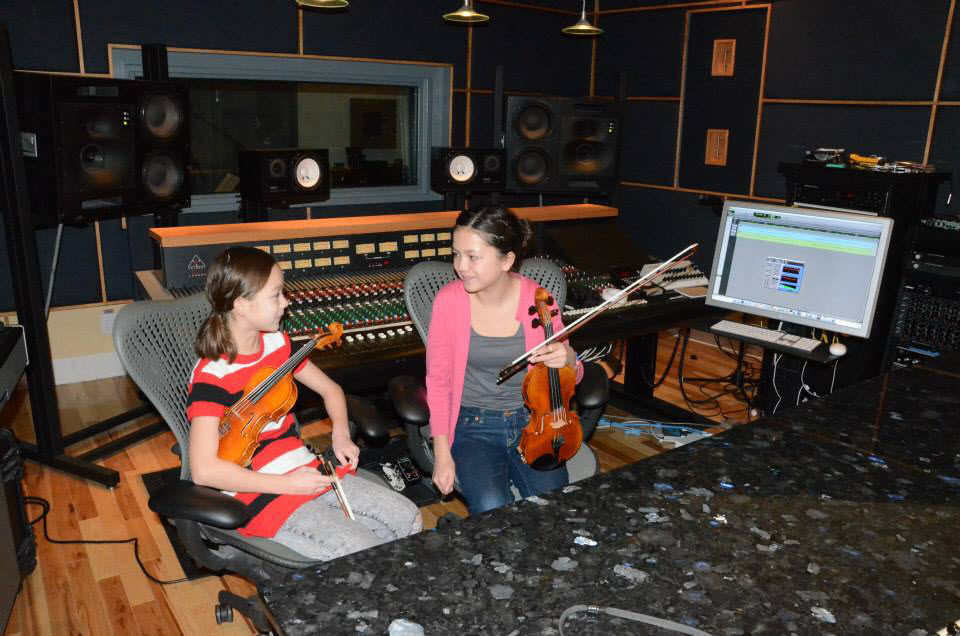
Josie and Ava are members of a Symphony.

This is their second year. The Symphony is made up of four divisions, with Division IV being the most junior, and Division I is made up primarily of 8th and 9th graders, the highest level of the Symphony. They hold chair auditions three times a year.

The girls jumped right up to Division III from the beginning and we were all amazed. Since then, with each audition for a new seat, they’ve moved up. I warned them that this is highly unusual, and that they should be prepared for moving down at some point. After all, they’ve observed this happening to many others in the group. This year, they made it to Division II, Violin I, and I told them that this is quite an accomplishment, that they ought to be proud and keep working hard.

The girls auditioned. When I asked how it went, Josie was quite confident that she did well. Ava was less sure, “I messed up on a few measures. But I think I did OK.” It turns out that Josie jumped many seats up. Ava moved down about 15 chairs. This was traumatic for her. This was her first “fail” (although I didn’t see it that way). For a week, she slumped and was sad. She mentioned a viola player who did the same thing: he was 2nd chair and fell to second to last. “Mom, I noticed this boy, he fell many seats and he used to sit really tall. He was proud and now, he has terrible posture. He is always frowning and he doesn’t look like he wants to be there.” I asked her, “And what do you think of that?” “I think it’s sad.” A few weeks passed. “Mom, remember that viola player I told you about?” “Yes.” “Well, I noticed he’s still slumped and depressed. I even wonder if he’ll quit.”  I expected her to tell me how she was going to cheer him up. I thought she would share with me her plan.

“I’ve decided that I don’t deserve to sit where I’m sitting. I messed up in the audition, but I’m better than 22nd chair. I’ve decided that no matter what happens, no matter where I’m sitting, I will sit as if I am sitting where I DESERVE to sit.”

I was blown away. This is something I learned late in life:  Disregard what others think of me and hold my head up high. She’s only ten years old. How did she know this?

“Wow Ava, I am very proud of you. That is amazing that you came up with that on your own.”
“Well, this boy, he’s very good too and he shouldn’t let it affect him this way.”

Yet another life lesson learned through their serious violin practice.

Letter to the Doctor

Dear Friends and Family,

I just wanted to share a letter I sent to my first oncology surgeon with you. The most empowering, important lesson I have learned on this journey thus far is to take control of your medical records and your health! As most of you know, I was given my diagnosis in a very cold manner: “You have Stage I breast cancer.” That was it. He immediately recommended a mastectomy with reconstruction. I wrote him a letter weeks later, because that day will forever haunt me. Not simply because of the content of the news, but especially due to the delivery. Here is my letter:

Dear Dr. ________:

Although I am sure you have to impart bad news of cancer to many people in your week, each person you inform is hearing it for the first time (unless it’s a recurrence, which I’m sure does not make it easier). You are telling people (as a medical professional) their chances of survival. I want to help you be better at this. When you deliver the news, it is good to be factual, which you were. However, it would not hurt to be sensitive: offer tissues immediately as tears are sprung and look the patient in the eye during the conversation, not her partner.  I left your office feeling as if I was handed a death sentence.

I received a second opinion from another surgeon this week. His approach was different, although the end data was the same. He went over my pathology report line by line (it’s six pages)! He made sure I knew what “in situ” and “invasive” meant. He stressed the very good fortune that I discovered this as early as I did and told me I have time to make an informed decision. He did not press the surgery option at all. He gave me several choices: chemo, radiation, and surgery. He did tell me I need to do something: I cannot and should not let it be.  I felt empowered and hopeful when I left his office. Do not get me wrong, I know I face some serious hurdles in my future.

You strike me as a competent surgeon. However, I do not feel comfortable with you. There is absolutely no lightheartedness, no warmth or levity in our dialogue. I am blessed with an incredibly strong network of support and love within my family and friends. I am seeking the same in my medical team.

My best to you,

Caroline Chung-Wipff