Teacher Pay and Conditions


Fig3startz0620

Seems pretty trivial these days, what with terrorism, gun violence and dirty politics in the news, but teacher pay in America is still dismal.

The world looks to Finland when it comes to education, yet their teacher pay is about average in the world. America pays teachers less than Finland does – less than the average. Not only that, teaching is prestigious in Finland, the teachers are well-respected by everyone. Observe a class in a public high school here and I doubt you would find a high level of respect coming from students to teacher.

This article, written by Dick Startz (Professor of Economics, UC Santa Barbara), outlines the issues with underpaying teachers. Yes, many teachers in the United States love their job. They teach very well, despite the low pay. But maybe there are other people out there – highly qualified, passionate educators – who do not pursue teaching because the of the low salary.

There is a lot of waste of money in education. Nearly 50% of all teachers in the United States quit within the first five years of teaching. It’s not simply a question of salary. Teachers – especially math teachers – feel a lack of classroom autonomy. Autonomy is essential for satisfaction in ANY job. But if you couple a low salary with lack of independence, it’s a career killer.

We have a lot of work to do. We need to demand equal rights for all, we need to have gun control and we need to fix broken systems. Give teachers more respect, equitable pay, and more autonomy in the classroom.


“Parting is Such Sweet Sorrow”

IMG_1260


Dear struggling summer school student (about to enter 5th grade),

I was your summer school teacher for 3 weeks, 3 hours each day. Today, I said goodbye to you.

I (hope) you learned from me:

  • the value of working hard;
  • the importance of basic skills (math facts);
  • learning can be fun;
  • you are capable of so much more than you think you are, truly.
  • never, ever give up.


I learned from you:

  • a few of you are wracked with emotional pain (dad is in jail, parents are divorcing, etc.);
  • you like learning to be fun and you’re quick to learn;
  • you have some amazing teachers at your school (!);
  • “arm” in Spanish is brazo;
  • your lack of sleep might have to do with the violence on your street, late at night;
  • you hope to be the first in your family to go to college.


Work hard. Never give up. And you shall make it there.


Even if You Don’t Want To…

One of my summer school students – I’ll call her Liliana – was woefully deficient in her math skills. Going into 5th grade this year, she should be prepared to work math problems with fractions. However, she was still struggling with simple addition and multiplication. After working intensely for over a week, she grasped basic multiplication quickly.

After successfully solving four multiplication problems, I told her, “OK, you’re ready for division.”

Her eyes grew large. She stepped back from me. “No, not yet.”

“Liliana, you’re ready.”

“Just one more.”

“No, you’re ready. What’s the matter?”

She just stood there, silent.

“It’s ok if you make mistakes at first. That’s how you learn. Look how far you’ve come!”

She looked at me doubtfully. I gave her a problem to sort out, after working one through for her.

She returned with her work. She had made one small mistake. Her brows were furrowed. She was looking at her mistake.

Yet she had successfully worked out several steps correctly before that.

“Look at how far you came, Liliana! Look at how many steps you got right. Focus on that. And now, study your mistake. This is learning.”

She’s still working on division. It will take time. But you and I know that  if she’s determined and works consistently, she will master it.

How many times do we shy away from the next step? How many times do we say, “Not yet”? And how many times do we focus on our mistake and not our successes?

Take that next step, even if you don’t want to.


Father’s Day


Summer School. Day Five.  12 students. Ten more days left. Our days together are so few and there is so much to do.

Kids are like mirrors. I am always learning from them and they show me things about myself. They help me be better. Today, I was teaching them how to use Word: how to open it, type in it, save , change fonts, etc. We were making Father’s Day cards and the fact that one student’s father just went to jail was not lost on me. “If you prefer to write a card to your mother or grandparent, that’s fine.” She chose to make it for her father anyway.

“What if I need to write it in Spanish? My father can’t read English.”

(Taken aback): “How do you communicate with your dad then? How do you talk to each other?”

“We say, ‘How are you?’ and simple stuff like that.”

“OK, Type it in English and we will translate it to Spanish when you are all done.”

Several kids nodded and resumed typing. I continued walking around, helping, realizing the chasm within their families.

One student asks, “Mrs. Wipff, are you going to call Anthony “honey” too?”


What Do You Want?

Summer school students

yawning, with heads on their desks

                                                                 Why are you here?

To get smart!

College – what is that?

Listen – you can be whatever you want to be

You can do it!

But you must work hard

Now, write down what you want to be

Dream Big!

Mrs. Wipff, how do you spell….

(a list of jobs shouted out)

I write them down

20160607_114207

There. You can be successful,

but you need strong math skills

you need to work hard

it’s all up to you

For the rest of the day, I call on

the doctor, the engineer, and the mechanic

(oh, the teacher and the artist, too)

they smile with their new monikers

they work hard on this hot summer day


Academy Awards Night

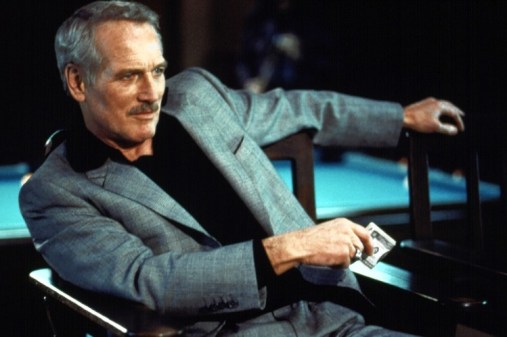
paul newman
Paul Newman (Everett Collection)

Tonight, our school, the Mesa Academy for Advanced Studies, will recognize award winners.

Students grades 4 – 8 will receive a plaque or a certificate or a trophy for Perfect Attendance, Honor Roll (GPA) and outstanding work in extracurricular activities.

It’s a night to publicly celebrate hard work and dedication.

Students who earn these awards do so because they push themselves consistently. They work hard every day and they reach their self-made goals because they want to do their best all the time. Some may do it for their parents or for the recognition. Others do it because seeing anything but an “A” on their report card means “all is well” or “I’m OK.”

Recognizing your hard work and appreciating excellent work is important.

However, ribbons, plaques and trophies are extrinsic motivators. Intrinsic rewards are the most powerful and enduring of all motivators. Do it because you love it. Some of our most famous and beloved actors* worked for decades before winning the other Academy Award:

Humphrey Bogart

Paul Newman

John Wayne

Judi Dench 

Martin Scorsese

Morgan Freeman

Henry Fonda

Jessica Tandy

Before, during and after receiving their awards, they worked dutifully to perfect their craft.

Outliers

If you haven’t read Outliers by Malcolm Gladwell, you need to put it on your reading list as soon as possible.

41h5QL0vVEL

In nine chapters, he illustrates and analyzes the factors for quirky successes as well as a few quirky disasters. One of the strong influences for some very interesting anomolies is the culture factor. For example, in the chapter “The Ethnic Theory of Plane Crashes,” he states: “Planes are safer when the least experienced pilot is flying because it means the second pilot isn’t going to be afraid to speak up.” One particularly frightening example Gladwell uses is that of Korean Airlines between 1988 and 1998. Their plane crash rate was 17 times higher than the U.S. In Korean culture, a subordinate (in this case, the first officer) plays a very passive role. This is not ideal in cases of inclement weather, mechanical failure or pilot fatigue. Only after a major revamping of their work culture, did KAL improve their safety status.

Continuing this analysis, I believe there is also a socioeconomic culture that keeps some people “down.” High SES kids are taught early to “speak up” and even question authority if they see fit. Low SES students generally do not question “experts” and do not feel they can ask questions in the classroom or the doctor’s office. Assertiveness is a skill that needs to be modeled and taught because a lack of it leads to apathy in health and wealth.


citation

Gladwell, Malcolm. Outliers: The Story of Success.
1st ed. New York: Little, Brown and Company, 2008.
Print

I Get to Teach Amazing Children

allegory

One of the writing prompts to my students last week: Think of something you must do. Maybe you have to do a chore. Now, put it in a sentence. For example, “I have to take out the garbage.” Make it a true sentence. Now, replace the words “have to” with “get to.” Do you see or feel a difference?

One of my fifth graders wrote this:

“I have to do the dishes. I GET to do the dishes. I have food I get to clean off the dishes. I ate food with my family last night. My dad, my stepmom, my brother and I talked and laughed and ate food and then I got to clean the food off the plates. I am really lucky because I have food to eat. I have a family to love. And I get to do the dishes.”

The Mother Land

Recently, I discovered that Korean refugees from North Korea are actually discriminated against in South Korea!

I couldn’t believe it. Where is the humanity? The abuse and absolute horrific treatment of North Korean civilians by their government is well-known so why would South Koreans greet them with anything but open arms?  It’s clear that education and empathy are absent.

Enter an amazing South Korean TV program called, “Now On My Way to Meet You.”  It’s an example of using media as a powerful medium for positive social change. The program first aired December of 2011 and, despite the tagline which alludes to “North Korean Beauties,” it does anything but objectify these escapees. You can read more about it and watch a clip here: Cari’s Blog. Basically, these women play games, laugh and recount their stories of life in North Korea for an enormous South Korean audience. The result?  An empathetic reaction where South Koreans are understanding and seeing these women as people.  The culture is slowly evolving into a supportive, loving one towards their sisters and brothers.

Sewol Heroes
Sewol Heroes

I have numerous cousins, aunts and uncles who live in South Korea and I have visited the country three times. In 1999, I was there for two months on an NSF research grant and I fell in love with the land and people. As news of the ferry disaster unfolded, there was a collective sigh of exasperation, shock, and anger all around me. How could this happen? The students were told to stay put? Why?!

If my father had not decided to immigrate to the United States, I could have been born and raised in South Korea. In fact, if that had happened, I would likely have been married with children a bit earlier (and who knows?)  I could have had a high school student on the ill-fated Sewol ferry and be mourning his/her death right now. These connections and possibilities only make me ponder our roles in life. I’m a teacher and I’m proud of it because I can actually impact 32 young people per year. But… can I do more? The producer of “On My Way to Meet You” has created such a critical solution to an enormous problem.  What if we all stopped asking why and started asking how? HOW can I help this situation? I think it’s a powerful question.


Paradise

“I like a teacher who gives you something to take home to think about besides homework.”  Lily Tomlin

I love teaching, educating, inspiring students through field trips. Students (especially low income ones) need to get out into the world and meet new people.  They need to explore. However, I can’t stand being on the bus to and from our destination. The screaming, the singing and the physical jostling – ugh!   I have learned  a couple coping techniques from years of experience, but I still believe teachers should be chaperoned separately, in a quiet car with our beverage of choice. The adult chaperones on the bus with the kids should be those people who say teaching is easy and that class size doesn’t matter.

On our bus ride to Arizona State University for a science expo, I allowed my class to board the bus first and then I got on. I stood at the front, assessed the situation, rearranged a couple kids to help minimize noise and “issues” and then took a seat near the front. Fortunately, sixth graders do NOT believe it’s cool to sit next to the teacher. Ah, a seat to myself!  The other sixth grade teacher, Mr. Ash was relatively new to teaching. I noted him sitting in the middle of the bus, between his class and mine, sharing a seat with a boy.  Mr. Ash is a super nice, tall man with big brown doe eyes. Throughout our ten week stint together, he constantly reflected on his work, noting what was working and what wasn’t. I liked that.

As we rolled down the freeway, one of my students asked me to turn the music up. It was so loud with sixth grade chatter, I didn’t even know the radio was on. “Don’t you think it’s loud enough in here?” He begged and gave me the prayer hands. I asked the driver, “Do you think you could turn the radio up a little? You’re the driver, if you don’t want to, it’s totally up to you.” Safety first!

The driver complied with no expression on his face. His eyes never left the road as his chubby fingers dialed the volume up. Instantly, the entire busload of students was singing at the top of their lungs:

“Your sex takes me to paradise, yes your sex takes me to paradise and it shows, YEAH, YEAH, YEAH!”

I was at once mortified and amused. I looked back at Mr. Ash, his face in his hands.

Image