Is Benadryl Harmless?

It started a little over a year ago.

I would wake up at around 1 or 2am every single night. Er, morning. I would be wide awake and it would take about a half hour for me to fall asleep again. Of course, I’d feel less than 100% the next day. I need my sleep, at least 7 if not 8 hours. A friend of mine suggested I take Benadryl. She’s a nurse, so I trusted her.

Taking Benadryl every night helped tremendously.  I slept through the night and felt refreshed each day. A creature of habit, I did this every night for over a year.

And then I read this article.

Basically, anticholinergic drugs have been found to cause dementia in people 65 and older who used them for over 3 years.

This was the first study where they looked at over-the-counter drugs. You would think that if you don’t need a prescription, they’re very safe, wouldn’t you? Not so.

The writer recommends you take all the drugs you are taking, put them in a baggie and discuss your use with a doctor. I have mixed feelings about that. Of course, it sounds logical. However, for those of you who know me, I was diagnosed with breast cancer over five years ago and I believe that it was caused by being on birth control pills for so long. When I complained to my OB about my PMS pain, she literally pushed me onto the BC pills and assured it was acceptable to be on them for years.

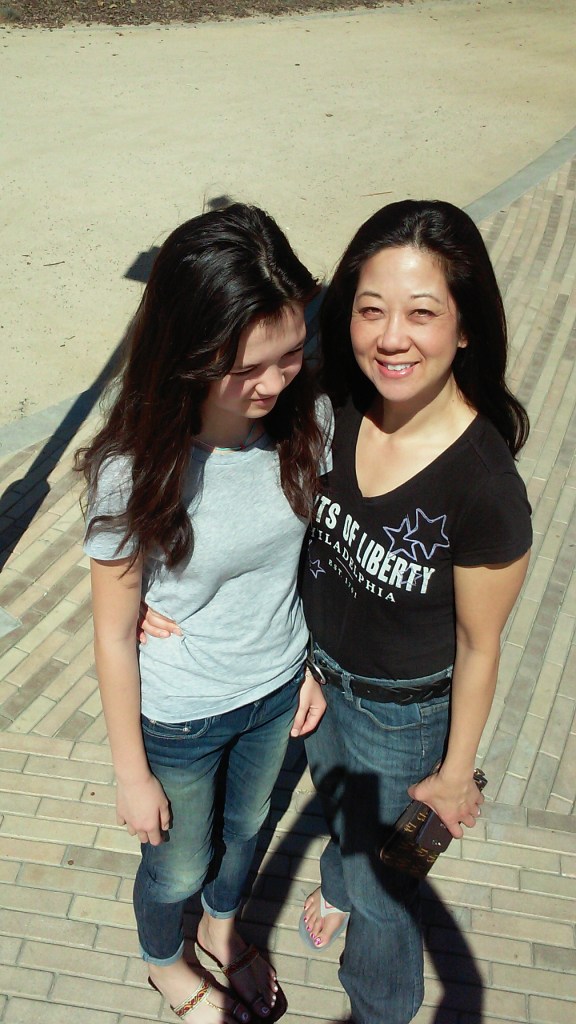
I’m Asian. I don’t eat much red meat. I exercise regularly and am not overweight. I have never smoked. I have no breast cancer history in my family at all. I am in the lowest quartile for breast cancer risk. And yet it happened.

That’s my hypothesis. Beware of popping pills to solve your problems! You might create bigger ones!

IMG_3231


Monday Meditation

bryan does yoga
Bryan Kest

I practice yoga at home. I don’t practice enough, but when I do, I like Bryan Kest’s Power Yoga video.

My favorite part of the practice is when he says:

“It’s not WHAT you do, but HOW you do what you do.” 

He says it slowly and it makes me think every time. Yes, how you do what you do.

Example #1:

Your server at the restaurant carefully places the plate in front of you, smiles and wordlessly refills your glass.

OR…

Your server brusquely sets your plate down and hurries off to the next table.

Example #2:

Your daughter tells you a story and you listen while looking at your cell phone. She feels like an after thought.

OR…

You give your daughter full attention – eyes and ears – as she tells you a story. She feels loved and respected.

We have our “to do” lists. We have jobs that have to be done. We do these action items day after day and they build up to weeks, months and years. This is called “our life.” There is no end to the things that need to be done. But the quality of our life is in the how of what we’ve done on a consistent basis.


Strength


When I am strong physically,

it helps me gain strength

in all the other areas of my life.

3-13-15 - 1

Therefore, exercise is a top priority and my keystone habit.

A keystone habit, according to Charles Duhigg, is a habit that starts a chain of other habits that improves one’s life.  For example, exercising regularly influences my diet – I make better choices. I also sleep better. My family also tells me I’m more pleasant to be around. (I mean, really, how could I be more congenial than usual?)

Knowing that exercising is my keystone habit motivates me even more to maintain my regimen. It makes everything better!


← Back

Thank you for your response. ✨


Evolution

My Spam box this morning contained golden nuggets of information: exotic Russian women are waiting for me – as is an $800,000 donation from a very generous woman named Donna.

One thing that is always in my Spam box, the news, magazines and billboards is some variation of the theme, “Lose Weight Quickly”.

I’ve learned that this is a very bad idea and, as with most things, I learned this lesson the long and hard way.

When I was 7 years old, I ran around the neighborhood with my friends Renee and Cathy.  We played tag, rode our bicycles and re-enacted “Charlie’s Angels.” I ate what I wanted and I ran around a ton.

At 12, my parents started telling me I better not eat too many Cheetos. I’d get fat. Why did we have Cheetos and Ding Dongs in the house? I started to look for the fat. I started to worry.

At 14, although I was below average weight for American girls my age, trying on jeans would reduce me to tears. I didn’t look like Brooke Shields in her Calvins. My sister and I started dieting and exercising. We were miserable, but felt like we were “taking control”.

The next five years were a roller coaster of diets. At this time, it was all about low fat and cardio. We were mildly successful.

When I landed my first job, I made a salary that was considered poverty-level. Paying back college loans and working in San Francisco, I could only afford pasta for breakfast, lunch and dinner. I developed a wheat allergy, so I ate less. The radio salesladies commented on my tiny waist. I was physically a wreck, but damn, I looked good.

I got a bit wiser and healthier. When I was pregnant with my girls, I suddenly cared a lot more about being healthy and a lot less about looking thin. When they were toddlers, I got naturally strong, carrying an infant and the car seat made me strong. Carrying an infant, a car seat and chasing a toddler  made me even stronger.

Now, my goal is to be as strong as I can be for as long as I live. Lifting heavy weights, rollerskating at the rink, practicing yoga and taking frequent walking breaks has made me stronger than ever. A surprising side effect to all this strength training? I think I look better than ever, too.


Habits

Trying to lose weight?

Want to step up your work performance?


20160427_175914
At Art Show – Mesa Arts Center, Mesa, AZ

The importance of developing excellent habits in order to reach lofty goals is well-known. However, James Clear and Charles Duhigg  (The Power of Habit) have studied the efficacy of habit-making and, after reading their work,  I found 2 findings especially enlightening and helpful:

  1. Habits generally take 66 days to form permanently and;
  2. Considering making a “habit” a personal rule (“I never eat candy” or “I always workout at 6am”) for example.

Clear admits that although the (commonly held) belief that it takes 21 days for a habit to hold sounds better than 66, it’s actually inspiring to know that it takes longer. If you “fall off the wagon” within the 21 days, you know that you haven’t failed. You just get back up and continue the work.The habit hasn’t formed permanently yet. Don’t give up!

Personally, I feel a difference between saying “I want a,b,c, to be a new habit” vs. “My rule is a,b,c.” It feels permanent and there is no wiggle room.


Outliers

If you haven’t read Outliers by Malcolm Gladwell, you need to put it on your reading list as soon as possible.

41h5QL0vVEL

In nine chapters, he illustrates and analyzes the factors for quirky successes as well as a few quirky disasters. One of the strong influences for some very interesting anomolies is the culture factor. For example, in the chapter “The Ethnic Theory of Plane Crashes,” he states: “Planes are safer when the least experienced pilot is flying because it means the second pilot isn’t going to be afraid to speak up.” One particularly frightening example Gladwell uses is that of Korean Airlines between 1988 and 1998. Their plane crash rate was 17 times higher than the U.S. In Korean culture, a subordinate (in this case, the first officer) plays a very passive role. This is not ideal in cases of inclement weather, mechanical failure or pilot fatigue. Only after a major revamping of their work culture, did KAL improve their safety status.

Continuing this analysis, I believe there is also a socioeconomic culture that keeps some people “down.” High SES kids are taught early to “speak up” and even question authority if they see fit. Low SES students generally do not question “experts” and do not feel they can ask questions in the classroom or the doctor’s office. Assertiveness is a skill that needs to be modeled and taught because a lack of it leads to apathy in health and wealth.


citation

Gladwell, Malcolm. Outliers: The Story of Success.
1st ed. New York: Little, Brown and Company, 2008.
Print

Are you looking for a REAL makeover?

I’m dedicating this portion of my website to life makeovers: not just losing weight or a getting a new hairdo, but overcoming huge obstacles like self-doubt, depression and “failure.”

The easiest and most motivating way to do this is to learn from people who are doing or have done what you are dreaming of accomplishing!

The Debut Spotlight belongs to someone who, against all odds, overcame incestual abuse, spousal abuse and debilitating depression. She is also a single mother of two beautiful daughters. Still think you can’t overcome your current struggle? Meet Laurie Lee…. She lost 130lbs and gained a brand new life.

The “Baggage”

Laurie experienced incestuous abuse at a very young age from various male members of her family. She left her home, fell in love and got married at the age of 26.  After having two daughters, she realized she was in a loveless marriage. There was no physical affection of any kind and no emotional connection. At age 33, she was divorced. “The weight gain just happened,” she says. “After ten years of absolutely no exercise and bad eating habits, I weighed 275lbs.”

She was working at a bank and doing very well, but her boss could tell that she needed help, and told her so. Fortunately, Wells Fargo has excellent insurance for employees. They covered counseling sessions and, despite her doubts, she went. “I didn’t expect anything to change, but something did.”

Laurie’s therapist is an exceptional one. While Laurie kept calling herself, “broken,” Tammy was adamant that nothing was broken, especially Laurie. During her first session, Tammy listened to her 100%. There was no agenda and Laurie was shocked.

After several sessions of Laurie sharing her painful past with her, she declared, “I want to lose 100lbs this year.” Tammy didn’t blink an eye. Laurie thought she’d say, “That’s nice, but you have a lot on your plate already.” Instead, she said, “OK.”

Throughout their next sessions, Tammy began using words like “fearless” and “warrior” to describe Laurie. It was a challenge – a very big one – but slowly, Laurie began to see herself that way. “Those are powerful words!” Laurie says.

Losing the Weight

Laurie said she wanted to try running. Again, she expected Tammy to laugh in her face, or say she wasn’t ready. Tammy accepted her wishes matter-of-factly. Laurie joined a running support group. The group supported much more than running, the women supported each other emotionally. “Running, for me, is a mind clearing event,” Laurie says over her salad. “But I started running to prove to Tammy that I couldn’t run.” It took her over a month before she could run a mile. She watched “The Biggest Loser” and admired Jillian Michaels. Laurie lost 60lbs. in 7 months.

It’s been a rollercoaster, Laurie’s weight loss and increase in self-esteem has not been easy. She’s cried a lot, felt alone much of the time and struggled with feeling at ease. With over 1/3 of the United States’ population being obese1, this disease is a pervasive, challenging one to overcome. The roots of obesity’s cause run deep. Mid-way through her progress, that discouraging voice still reared its ugly head. Laurie wanted to prove to Tammy that she was right, she was broken. So she brought in a broken flower vase. “You see, this is broken, this is how I feel. I want to feel whole again.” Tammy showed her a website of art created by broken glass. “So, you think these pieces of art, made of broken glass have no value?” “No, I mean…they are definitely worth more than just a broken vase.”

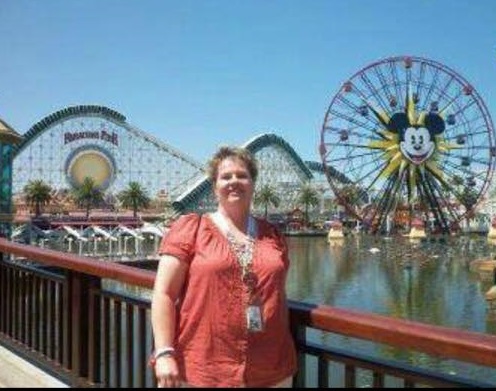
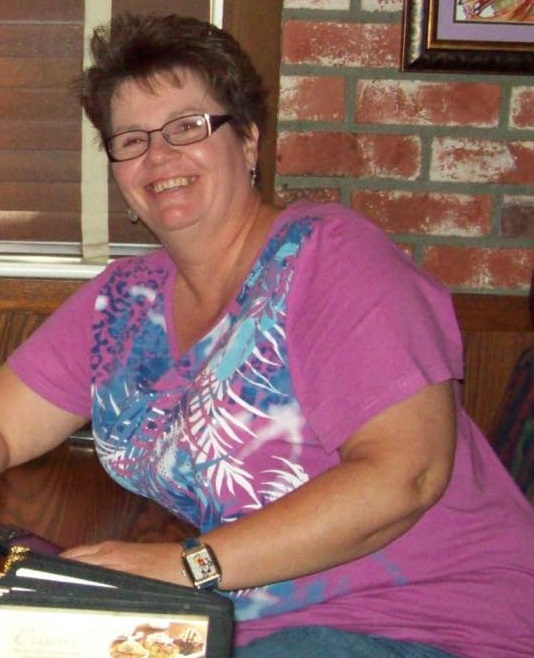
But now, Laurie feels better than ever. Take a look at the gallery:
rollercoaster restaurant dirtygirl run today

She’s still losing weight (slowly) and she’s enjoying the process!  These days, it’s more about the feeling she gets after the run. Some runs are inspiring, others not, but she always feels better after going on one.

Key Factors for Success

Take advantage of insurance and offers of help from others.

Know that life is a journey, not a destination.

Change your thoughts, learn to live through your heart. You come out the other side stronger.

Think less and feel more.

Don’t diet, just be aware of what you eat and stay active.

Get cute outfits, you want to look good.

References: http://www.cdc.gov/obesity/data/adult.html 1

If you’re curious about your BMI (Body Mass Index), here’s a calculator: http://alturl.com/m7nay