268 of 642 Things to Draw

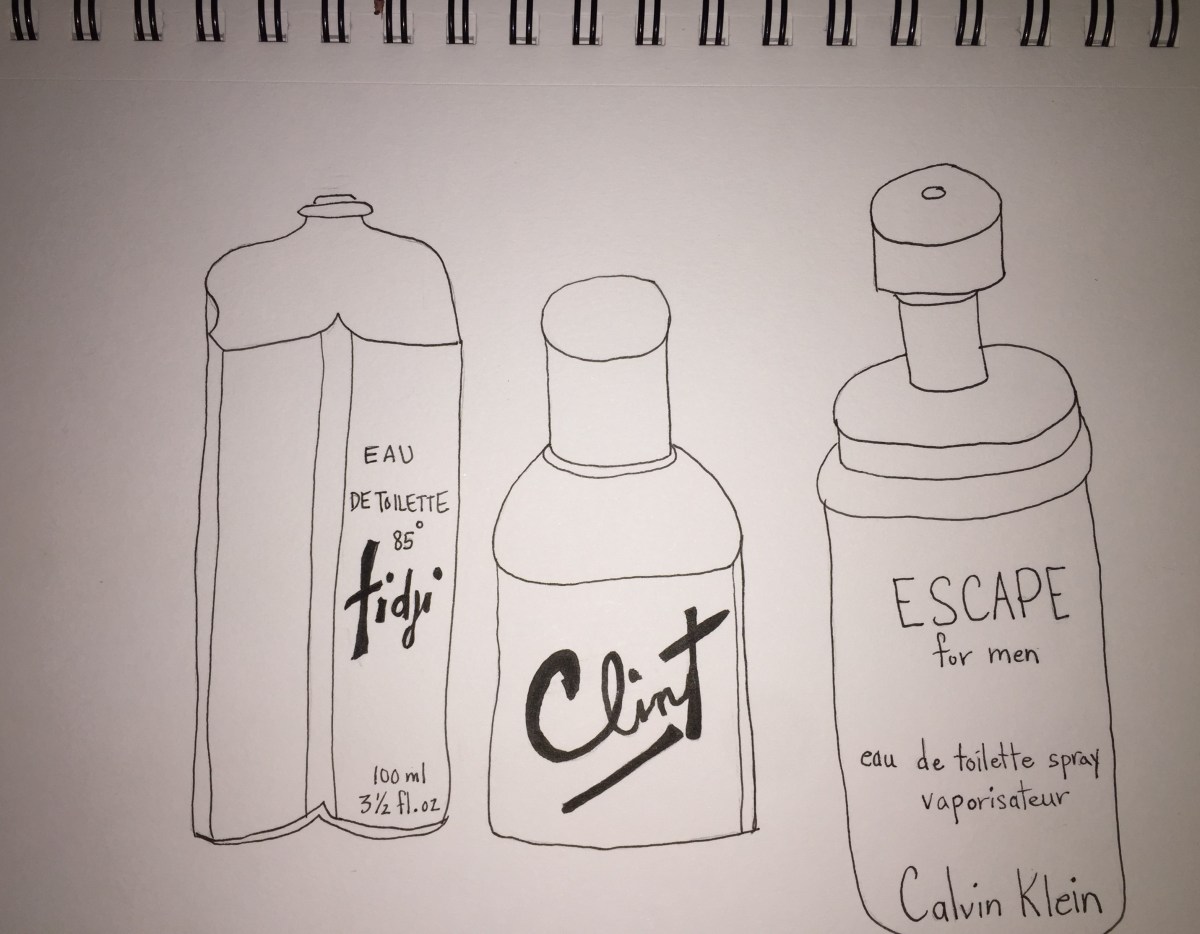
My mom used to work as an Avon lady and at the Macy’s cosmetic counter. My parents don’t throw much away, so they have many cologne bottles in the house: some broken, some empty. I like to draw them and study the text, logos and bottle shapes.

He talked as I taught the lesson. I asked him to stop.
He talked some more during work time. I asked him to stop.
I changed his seating – nestling him between two quiet students. He talked out loud instead of getting his work done.
I called him to my desk. His parents’ phone numbers were in front of us.
I rarely call home.
“Who shall I call? Mom or dad?”
“Mom,” he said.
“Dad it is!”

Curriculum Night
Inform parents about class
Learning never ends

One of the biggest lessons in life I’ve had to unlearn is that my children are “mine.”
Gibran’s words are plain and true:
Your children are not your children.
They are the sons and daughters of Life’s longing for itself.
They come through you but not from you,
And though they are with you yet they belong not to you.Kahlil Gibran
Too many parents believe their children are a reflection of themselves. Our job as parents is to provide nourishment and safety for these souls. But they are whole people already – we do not – SHOULD not – impose our dreams on them.
Writing prompt: What do you want to be when you grow up?
Student: This prompt makes me sad. Because I don’t know. My parents tell me I must be either be an engineer or a doctor. I cannot have a job that pays less than that.
Teacher: Well, let’s say your parents tell you that you can pursue ANY profession that you want. What would it be?
Student: I don’t know…I don’t know, because I’ve never even thought of it.
Why do parents tell their kids how to live your lives when they have their own?
By the way, Gibran never had children. Maybe he could be this wise because he had the distance necessary to see the whole picture.


There is a label, in the education field, for parents who “hover” over their children in an overprotective, and micro-managing way: helicopter parenting.
As teachers, we get it. You don’t want your child to ever “fail.” You want to prove to your child, the world, your self, that you are an involved parent. But you are not doing your child any favors.
When you hover, you:
Sometimes, effective parenting means surrendering.

Dear Mom and Dad,
Thank you for all the piano and cello lessons. Music has been a lifelong passion of mine and speaks to me in all facets of my life. I’ve developed a deep appreciation for it and (hope) I’ve passed that on to my daughters. You sacrificed money and time for us and now I’m doing the same.
Thank you for the Tae Kwon Do lessons. It was hard and it must have been difficult for you to watch Jojo, John and me kicking and punching and getting beat up by grown ups in class. When we broke boards, we felt a new found satisfaction in our focus and power.
Thank you for not allowing us to quit, even when we cried.
Thank you for encouraging and allowing us to work in the cornfields of DeKalb, IL. We got cut by the sharp leaves of the stalks. We sweat and walked 12-14 hours a day during “peak.” But we learned the value of hard work and the true value of money.

Thank you for allowing us to ride our bikes all over town and for speaking in Korean in the house and pushing Korean food on us, when we just wanted McDonald’s. We came to appreciate different spices and vegetables and it’s a lot healthier, too.
Thank you for not going easy on us.We learned to handle disappointments, heartache, and pain. I was able to handle difficult bosses, financial stress and cancer because you allowed us to become strong and tough. Thank you.
Dear parents-who-are-not-voting-this-year,
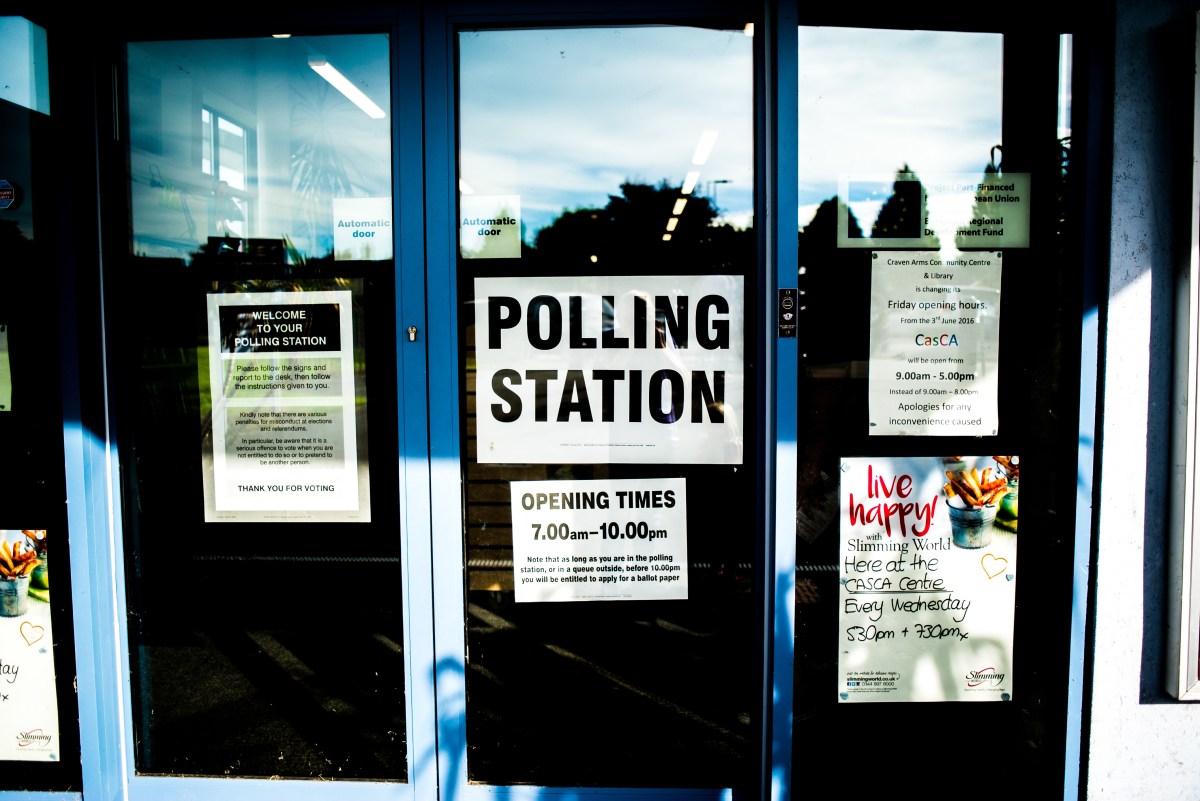
I understand some of you are disgusted this election year. Your children tell me in my classroom you are so upset with the choice of candidates that you are not voting in this election.
Ok. I get that.
Let me tell you what’s happening. Your kids are shutting down in my social studies class. They don’t want to learn about the election. We had “Kids Voting” this week. Half the class shouted, “I don’t want to vote!” They are repeating very hateful phrases that I cannot believe you’d ever let them hear, let alone say.
This is uncharacteristic of my students. They usually want to engage in discussion of real life issues. They are always thirsty to express their thoughts, to learn, to analyze and participate. I’ve never seen them like this.
So I reminded them that people in some other countries (North Korea, for one) are not allowed EVER to vote. Your kids know about North Korea because I told them my parents were children during the Korean War and that they didn’t have access to a school or new shoes for at least six years of their childhood. Many of our American children (my daughters included) are untouched by deprivation of basic needs: freedom, shelter, food. But not all American children are untouched by hunger, homelessness or hate.
I reminded my students that millions of people have given their lives so that their children might vote. Voting is a right in America. If apathy continues to grow, it might become a privilege for just a few. It once was, you know, right here in America.
I encouraged instructed the class to log onto the Kids Voting website. I distributed access codes and told them to open another tab and look up words and issues if they did not know what they were. I told them to vote according to their beliefs. I told them there is no right or wrong answer. Beliefs are your own, like opinions.
They talked to each other, they looked stuff up. They talked some more. Not a single argument. Friends disagreed, but remained friends. No one tried to talk the other out of anything.
It took 30 minutes for the students to research and vote on about 5 issues/positions.
When they were done, most were very pleased. “I finally know what an electoral college is!” I noted that the students who were not that enthusiastic were the ones who just guessed and voted. I know this because when I asked why some felt “Just OK” they answered, “Because I didn’t know what I was voting for.”
As an educator, it’s my job to ensure I teach your child to think critically. How can they do that if they shut down? Why would they think critically if they adopt a “what’s the use” attitude? Why strive to reach compromises for the Greater Good if you only hear hate?
Upon completion, they received an “I Voted” sticker. Remember those? Remember how proud you were to wear one?
Catherine* raised her hand.
“Mrs. Wipff, why can’t we all just have our beliefs and still be nice to each other, even with people who disagree with us?”
Indeed, why not?
*not her real name
 Kismet