If you are suffering and you want the suffering to stop, it’s time to question your thinking.
– Byron Katie, A Thousand Names for Joy
If you are suffering and you want the suffering to stop, it’s time to question your thinking.
– Byron Katie, A Thousand Names for Joy

Elizabeth Gilbert, American Author
“Perfection is the death of all good things, perfection is the death of pleasure, it’s the death of productivity, it’s the death of efficiency, it’s the death of joy. Perfection is just a bludgeon that goes around murdering everything good. Somebody once said I was disingenuous for saying this, because surely I try to make my work as good as it can be. And that’s absolutely true — but there’s a really big difference between ‘as good as it can be’ and perfection.” – TED, September 2015

“…you can be whatever you want to be because you are the artist and your life is your creation.”
Don Miguel Ruiz, The Voice of Knowledge

“If you clean up the lies you believe about yourself, the lies you believe about everybody else will change.”
Don Miguel Ruiz

The world is moving faster than ever. Impatience and tempers ablaze. Stress fortifies insomnia. Chaotic thoughts emanate from the computer, the phone, and your mind.
You must deliberately seek the quiet, the stillness, and nature.
Be silent. There is no place to be, but here.

Yesterday morning (before it reached 118 degrees), I washed the outdoor chaise cushions (pelted by bird poop) with eco-friendly soap and the hose. The bolsters were heavy with water and I carried them to dry against the boulders that were once where our pool now gleams.
Once dry, I placed the cushions back on the loungers.
This morning, I noticed new “gifts” from a bird on one of my freshly cleaned cushions. The mourning dove made eye contact with me from his perch in the tree.
I Googled “how to keep birds out of trees“.
Possible solutions: a scarecrow and shiny objects placed in the branches. Neither one of these would fit my husband’s delicate aesthetics, so I thought some more.
How about cutting the branches off? Oh no. That would not do. We need all the shade we can get around here.
Ooooh! One of those large, fake owls!

More ideas from the Internet: pie tins, old DVDs, mylar balloons. No, no, no.
In the end, I simply moved the chaise from under the tree. Problem solved.
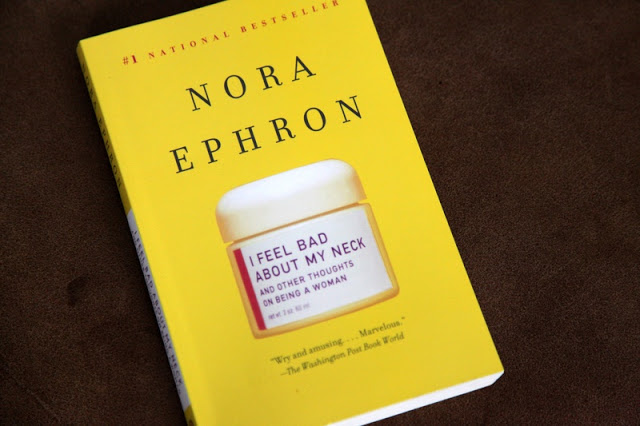
Have you ever read something that was just what you needed to read?
I finished reading Nora Ephron’s I Feel Bad About My Neck. There is an essay/chapter within it titled “Parenting in Three Stages.”
“Adolescence comes as a gigantic shock to the modern parent, in large part because it seems so much like the adolescence you yourself went through. Your adolescent is sullen. Your adolescent is angry. Your adolescent is mean. In fact, your adolescent is mean to you.”
Back when they looked like this,

I could ask them to make their beds and they’d respond with sweet laughter (even if they didn’t make their beds).
But now, they look more like this:

and if I ask them to do the smallest thing, fire comes out of their ears. They whine. They sigh heavily. They’re angry.
Thank you, Nora, for letting me know their behavior is normal. I can laugh it off now. Kinda.

Yesterday’s post was a review of Pema Chodron’s take on laziness (part one) from her book The Places That Scare You. Chodron asserts that there are three “debilitating habitual patterns” that we often partake in.
The second type she identifies is “loss of heart.” One symptom of this form is when we tell ourselves something like, “I’m the worst. There’s no hope for me. I’ll never get it right.” (Chodron, 90).
When we become lazy with loss of heart, we avoid interacting with the world. We retreat and we watch lots of TV (or surf the net). We eat, drink, smoke and watch the screen mindlessly. We have forgotten how to help ourselves.
The remedy for Lazy Type 2 is the same for Lazy Type 1. Get curious. Ask the right questions (hint: one wrong question would be, “why me?”). Notice that you don’t have to subscribe to negative thought or belief patterns. You can choose differently.
We often condone our behavior. We say we are “happy” and deserve to relax. But in reality, we are “haunted by self-doubt and feelings of inadequacy.”
Why concern ourselves with these notions of laziness? As Marcus Aurelius (Roman Emperor, 161 – 180 AD) reminds us in The Meditations, our lives are short. There is no time to waste.

They come in all sizes and shapes,
from lands near and far,
their parenting styles differ greatly,
but all hold the same love in their hearts
Happy Father’s Day!

My daughters are participating in a summer violin camp for 9 days. It’s a 30 minute drive on the 202 West to the 101 South. I’m always on the 202, but haven’t had to drive the 101 South much. I don’t like it. Drivers speed and change lanes quickly. They all know where they’re going and they’ll ride up on you if you hesitate for even a second.
I woke up in the middle of the night last night and couldn’t sleep for over an hour. I was thinking of the 101. But this time, I remembered something.
Seven years ago, I had to take the 101 South to a high school twice a week, after work. I was completing my M.A, in Educational Leadership and I was in a night class. I had just been diagnosed with early stage I breast cancer and had a radical mastectomy. I was determined to finish the degree. So I drove to my class with tubes coming out of my chest. The tubes drained excess fluids where the tumors used to be. My chest was tightly bandaged and no one in my class knew what was underneath my shirt.
So my fear of this route was not so much the traffic, but old memories. The fear of infection, disfigurement, recurrent cancer… I had those thoughts during my drive. I mourned my life pre-cancer. Here is a post from that time.
My insomnia occurred on the seventh anniversary of my radical mastectomy.
Driving today, I felt much better. The apprehension was gone. Sometimes, just identifying the cause of one’s jitters and meeting it with compassion (not over-analysis or sentiment) can be enough to overcome it.

