Open

Image result

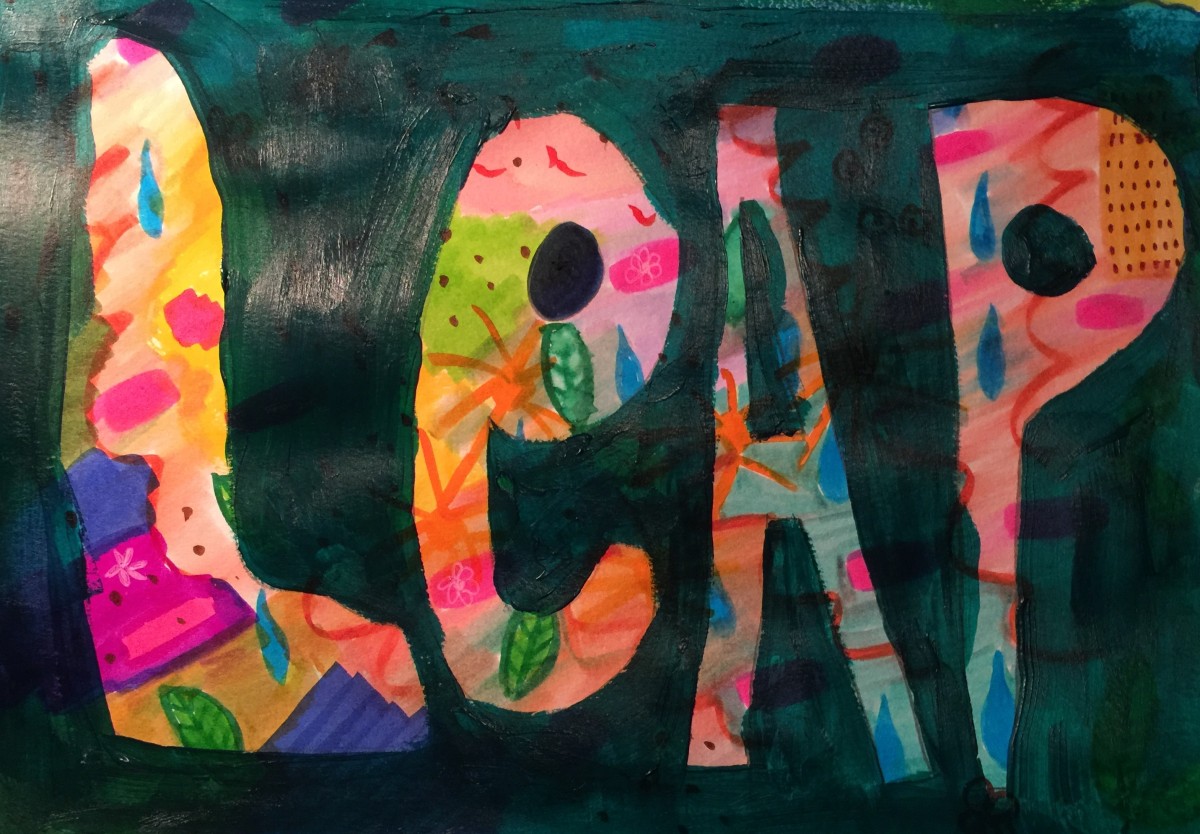
I was inspired by the spring cacti in my yard.

So I began to paint…

IMG-1338

16-year old daughter: Whatcha painting?

Me: A really stinky cactus.

D: Oh yeah? What’s it smell like?

Me: Garbage and butt.

D: It looks like a monster on Monsters, Inc.

Me: (laughing hysterically)

D: Draw some arms and legs on it. Call it, “Open to Interpretation.”


Isn’t everything?

Oops

IMG-1319
Watercolor Markers with white gel pen

We encountered the word “knickers” in our reading yesterday.  My class didn’t know what they were…I recalled wearing “knickers” when I was really young – the loose pants that were bound at the knees. You know, like these:

Screenshot 2018-03-30 at 1.51.41 PM
from Pinterest

Lesson learned: Do not Google “knickers” for a 5th grade classroom on the SmartBoard.


“How Children Succeed” (Con’t)

IMG-1311
Mini Bell Peppers (2 peppers = full day  of Vitamin C!)

Here is a continuation of my notes on Paul Tough’s research regarding “grit, curiosity, and the hidden power of character” as it pertains to children:

  1. Grit  p. 74

“Duckworth realized self-control has limitations. She believed that a passionate commitment to a single mission and an unswerving dedication to achieve that mission are more relevant when it comes to inventing something new or creating an award-winning (movie)/project. She called this characteristic grit.”

She created a 12 (now 10) question survey that turned out to be a remarkably accurate predictor of success.

It was more accurate a predictor of graduation rates for West Point than their own assessments.

  1. Quantifying Character

Levin, Randolph, Seligman and Peterson narrowed a set of strengths that were indicators of life success and happiness:

  • Grit
  • Self-control
  • Zest
  • Social intelligence
  • Gratitude
  • Optimism
  • Curiosity

They then created a “character report card”

Much confusion among educators regarding “character” – is it moral? Is it “performance character?”

  1. Affluence

Wealthy families may have “helicopter” parents (parents who hover over their kids as they do homework, sports, etc) but that does NOT mean they are spending quality family time together. In fact, many high-achieving, wealthy families are not closely bonded.

  • Madeline Levine, psychologist in Marin County, says that wealthy parents are more emotionally distant than any other parent from their children
  • Intense feelings of shame and hopelessness in their kids
  • Levine was inspired by Suniya Luthar, psychology professor at Columbia Univ who did a comparison study between low-income and high-income households.
  • Found 22% of wealthy kids suffered elevated rates of depression and clinically significant symptoms
  • 35% of affluent kids tried all four substances (alcohol, cigarettes, marijuana and harder illegal drugs
  • 15% of poor kids tried all four
  • Dan Kindlon, assistant professor of child psychology at Harvard, also found an emotional disconnect between wealthy kids and their parents
  • These parents were overly indulgent in their children’s bad behavior
  • Parents making more than $1 million said that they were far less strict than their own parents
  • A little hardship – discomfort – is good for children!
  • This is an issue in private schools – telling parents they are not parenting properly means you are criticizing your employers (clients)
  • A school like Riverdale (expensive, private – graduates include Chevy Chase, Carly Simon, etc) is not meant to help raise the ceiling, but to raise the floor = give kids a high probability of nonfailure.
  • They do not develop grit


  1. Discipline  p. 86

KIPP used to practice a lot of disciplinary action (some of which Levin regretted)

SLANT – stand up, listen, ask questions, nod, and track – taught at KIPP 5th grade

Code-switching – you must learn and practice proper behavior for the museum, college interview and nice restaurants

Rich kids at Riverdale wear casual clothes and slouch

Kids at KIPP are taught to have good posture and track teachers…formal speech

The administrators of both schools disagree on this point – what should students be taught?


Fresh

IMG-1298

As a huge fan of Lisa Congdon, I’ve basically exhausted her classes on Creativebug.com. I decided to venture out and try another artist: Molly Hatch. She’s awesome and does design work for Anthropologie. I’ve never taken art classes and she taught “the basics” which are very good to know:

Rule of the Thirds:

Screenshot 2018-03-23 at 6.37.55 AM

Basically, you make a grid of thirds (She did it on tracing paper) to help you visualize the “four corners” of intersection.”  The focal point of your art (for the viewer) will be in the center and ideally, your art should touch these areas.

I love being a beginner – everything is fresh.

Art washes away from the soul the dust of everyday life.

Pablo Picasso