Do You Have What it Takes?

IMG-1282

How passionate and persevering are you? Duckworth’s research shows the power of grit (courage and resolve). This is a strong indicator for success. People who score high in grit rarely quit or drop out of their pursuits.

Click here to answer the 10 questions: The Grit Questionnaire

How’d you do?

Grit is something you can work on. Duckworth believes you can use your results to reflect and increase your grit (if you want).


Sunday: Education Research

IMG-1281

The following is a continuation of my notes on Paul Tough’s book, How Children Succeed:

Chapter 2 HOW TO BUILD CHARACTER p. 49


  1. Best Class Ever – 1999 KIPP (Knowledge is Power Program) Academy – 8th grade – all Black and Hispanic, most low-income, earned the highest scores of ANY school in the Bronx (just four years in the program).

Climb the Mountain to College – college was always the goal

But only 8 got a college degree

Culture shock – overwhelmed

While in KIPP, they felt and acted like a family

KIPP did not prepare them for high school emotionally or psychologically

Nobody checks your homework


  1. Learned Optimism p. 52

Levin noticed that the kids who succeeded in high school and graduated from college were not necessarily the highest academically. They possessed other gifts: optimism, social agility, resilience.  Levin called these CHARACTER STRENGTHS.


Martin Seligman – Learned Optimism – it’s a skill that can be learned, not innate

Pessimistic adults and children can train themselves to be optimistic

Will lead to more happiness, health and success

Seligman – depression is simply a severe low mood

Pessimists react to negative events by explaining them as permanent, personal and pervasive

(e.g. failed a test because you’re stupid, not because you failed to prepare)

Seligman yelled a lot, in his class

Levin did a book study with his staff. Why do some of our students feel not well-liked?


  1. Riverdale p. 55

Levin grew up in a ritzy area of Riverdale – he was a standout student in math and science AND the captain of the basketball team; Director of his boarding school believes CHARACTER is missing in today’s qualifications in school (grit, working hard, perseverance).


Daniel Goleman – Emotional Intelligence

Randolph, Seligman and Levin had a meeting – the beginning of a fruitful alliance


  1. Character Strengths  p. 58

Character Strengths and Virtues:  A Handbook and Classification by Seligman and Peterson

A study in character; an effort to identify (concretely) what character is

Finalized 24 character strengths they believed to be universally respected

includes : bravery, citizenship, fairness, wisdom, integrity; love, humor, zest, appreciation of beauty; day-to-day interactions (social intelligence), kindness, gratitude


–These virtues were chosen because they could lead to the “good life” of fulfillment and meaning – had practical benefits

Seligman and Peterson – defined character as malleable – skills you can learn and practice and teach

  • Not finger wagging or blaming, but focus on personal growth (pg. 60)


  1. Self-Control and Willpower

Seligman, Levin and Randolph turned to Angela Duckworth (in her PhD dissertation, after working in schools, she said the problem was not just in schools, but students themselves) “Learning is hard…it can be daunting, exhausting and sometimes discouraging…character is at least as important as intellect.”

Duckworth started her research with self-discipline: 164 8th graders.

Self-discipline levels were more indicative to GPA than IQ.

Collaborated with Walter Mischel, famous for his marshmallow test with four-year olds (delayed gratification study).

Duckworth was intrigued by this study – how did those with more self-discipline strategize or help themselves to delay gratification?

“Children who did best at this test created their own distractions.”  [Talked, sang, covered their eyes, one kid took a nap]

With simple prompts, children were able to think of the marshmallow abstractly, which led to higher success.

After a six week long course to help students develop self-discipline, students believed they improved, but they didn’t.


  1. Motivation


Marshmallows were easy…very clear goals.

High school and college graduation are not as clear or tangible.

Duckworth divided the mechanics of achievement into two: motivation and volition. BOTH are requisites.


What if students just aren’t motivated to achieve the goals their teachers or parents want them to achieve?


All the self-control tricks in the world will not help.


But motivation can still occur. It’s just highly complex. Rewards sometimes backfire.


Reward systems in schools (stickers, candy, prizes) have not been successful.


  1. The Coding-Speed Test  p. 66


No one really knows how to motivate people well.What motivates us is hard to explain and hard to measure.


Different personality types respond differently to different motivations.


The coding-speed test (Segal) actually tested the test-takers’ inclination to force themselves to care about the world’s most boring test.

It was proof that they TRIED harder. The low-stakes, low-reward test predicted how well someone is going to do in life. Over decades, Segal gave the test to the same people and in their forties, he compared their salaries. Those who scored high on this test made considerably higher salaries.


  1. Conscientiousness

What Segal’s study measured was conscientiousness.

Brent Roberts, U of IL (Urbana-Champaign) – reigning expert on conscientiousness

This was not studied much by researchers because it denoted “control” and nobody wants to talk about people being controlled. However, Industrial/Organizational Psychology grew into everyone’s consciousness – because companies want to hire the most productive, reliable and diligent workers they can find. They found that conscientiousness was critical.

Roberts found that people high in conscientiousness:

  • get better grades in high school and college;
  • Commit fewer crimes;
  • Stay married longer;
  • Live longer (fewer strokes, lower BP, lower incidence of Alzheimers)

The Downside of Self-Control (p. 71)

People who are critics of the education setting are not swayed by conscientiousness findings.

“Strength of character” – includes conscientiousness, responsibility, insistently orderly, determined and persevering.

  • This measure was 3x more successful in predicting college performance than SAT scores or college rank
  • Critics believe there is an inverse relationship between high GPA and creativity; that corporations want “drones” to simply follow directions and work
  • Conscientiousness and self-control go hand in hand
  • Critics (Jack Block, UC Berkeley) believes highly conscientious people are “compulsive, anxious and repressed.”
  • A New Zealand study, however, runs contrary to this finding: a three-decade long study following children into adulthood found a strong correlation between lack of self-control to (at the age of 32)- more likely to have health problems, bad credit rating and trouble with the law (3x higher than those who demonstrated self-control as young children). Also, 3x more likely to have multiple addictions and 2x as likely to raise children in a single household.


 

Quotations on Patriotism

frenchc1955's avatarcharles french words reading and writing

It seems appropriate in these times of turmoil, in which terms like patriotism are thrown around easily, to put up some quotations about it. After reading Trump’s so-called joke about hoping for a President for life in the United States, I am compelled to point out that when he took the oath of office, among what he promised was, “. . . I will faithfully execute the office of President of the United States, and will to the best of my ability, preserve, protect, and defend the Constitution of the United States.”  (The emphasis is mine.) This is a sacred duty, and it must never been made a butt of jokes, nor must any President make claims to want to be “President for life.” Anyone who does that is not patriotic, and any American who is patriotic should be offended. My parents’ generation fought a horrific world war to…

View original post 254 more words

Walt’s Spider

IMG-1268

A Noiseless Patient Spider

A noiseless patient spider,
I mark’d where on a little promontory it stood isolated,
Mark’d how to explore the vacant vast surrounding,
It launch’d forth filament, filament, filament, out of itself,
Ever unreeling them, ever tirelessly speeding them.
And you O my soul where you stand,
Surrounded, detached, in measureless oceans of space,
Ceaselessly musing, venturing, throwing, seeking the spheres to connect them,
Till the bridge you will need be form’d, till the ductile anchor hold,
Till the gossamer thread you fling catch somewhere, O my soul.

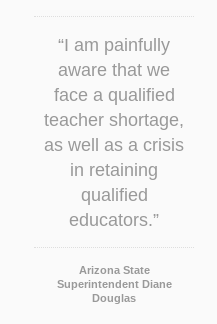
A Teacher Shortage, You Say?

IMG-1264
Incomplete Monochrome  (need a white gel pen for detail work)


What could possibly be the effect should this continue?

Screenshot 2018-03-14 at 9.49.59 PM

Screenshot 2018-03-14 at 9.41.51 PM


Screenshot 2018-03-14 at 10.07.10 PM

Screenshot 2018-03-14 at 9.40.41 PM


Solutions currently being considered implemented:

  • Hire teachers from abroad (Philippines);
  • Hire unqualified people;
  • Hire long-term substitute teachers;
  • Raise teacher pay


I’ve Joined…

IMG-1250
Multi-petal flower doodle

Creativebug.com.

Since taking a (trial) Lisa Congdon art class in watercolor, I’ve made drawing and painting part of my morning ritual. I don’t know where this will lead me (maybe my second self-published children’s book as author and illustrator?)…but I know I enjoy the process.

Subscription options for Creativebug.com are below:

Screenshot 2018-03-14 at 7.20.34 AM

They offer a multitude of art classes:

Screenshot 2018-03-14 at 7.26.34 AM

When you consider the cost of classes at your neighborhood art academy or fabric store, this is a steal: unlimited classes all month for $8!

Laugh at Your Fears


IMG-1243

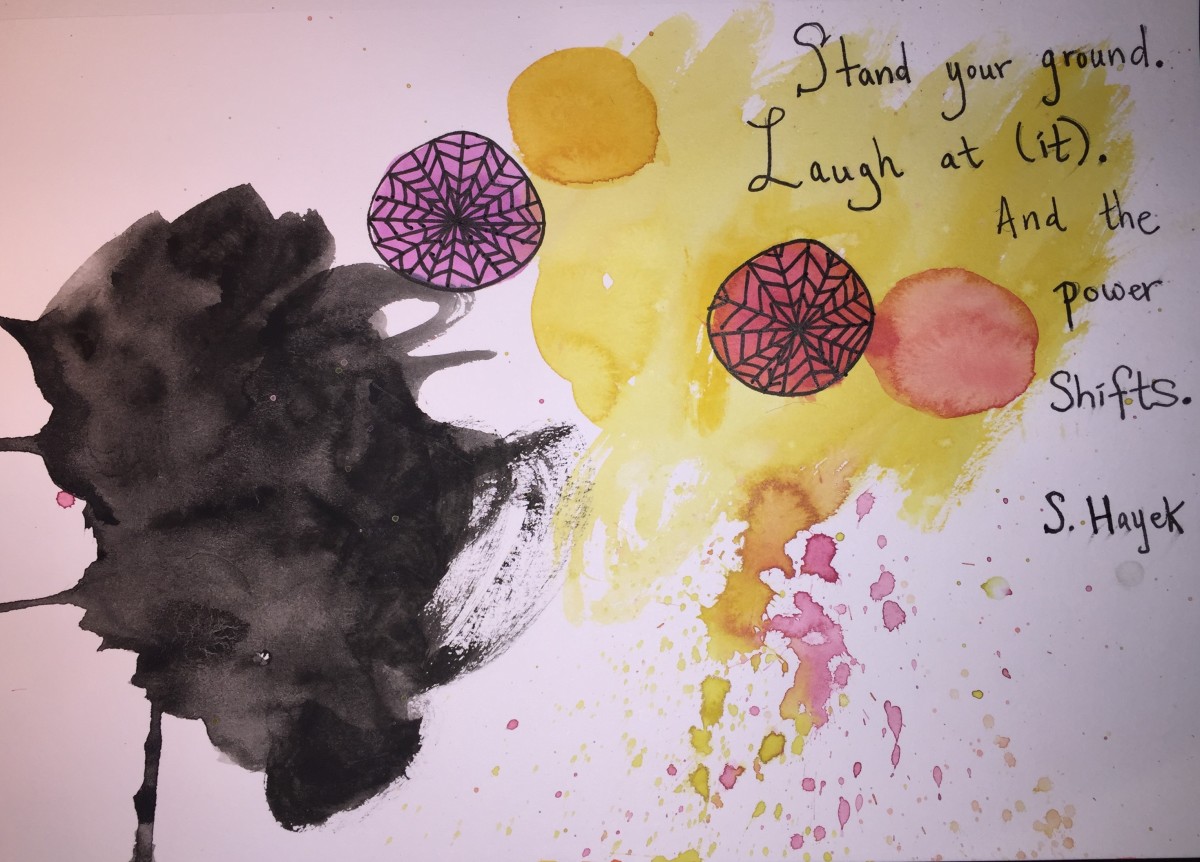
Salma Hayek told Oprah a story: When she was 10, there was a neighborhood flasher. This man accosted her and exposed his full frontal nudity. “I was terrified, just so scared…” She went home and told her grandmother who then gave this advice (Hayek offered a disclaimer – she is by no means telling little girls they ought to do this)  BUT…

“The next time that man flashes you – even if you are terrified and alone – LAUGH at him. Point at his groin and LAUGH.”

The man DID flash her again. And little Salma stopped. She felt her entire body tighten with fear. But she remembered her grandmother’s advice. So she stared, pointed at his groin and laughed.

“He ran away, he cowered and ran away!” Hayek says, still incredulous.

You can always choose to reclaim your power.


Relaxation and Ambition

IMG-1240

“…I was afraid I would lose my ambition if I relaxed.”

Hiroko Masuike, NY Times editor and photographer

“I have no ambition.”

Byron Katie, American speaker and author


Spiritual teachers (Daas, Tolle, Katie and others) emphasize the importance of being “present” in the moment over future goals. Sure, it’s fine to want something and to work towards it, but that is secondary to being present.

My favorite Katie quote, “So you think you want xyz and then you will be happy. Why not skip that step and just be happy?”


Education Research (cont’d)

IMG-1235
Circle Doodle


This post is designed mainly to hold myself accountable for research. I hope you can glean something from it at the same time. The following are my notes from Paul Tough’s book, “How Children Succeed”:


  1. Simon p. 19


Data has shown (for a long time) that executive function correlates with family income

But why?

    • Childhood poverty affects executive function (Cornell Univ., Gary Evans, Michelle Schamberg)
    • Working memory – ability to keep a bunch of facts in your head at the same time
    • “Simon” – children’s game
    • Kids in poverty for 10 years did worse than kids in poverty for 5
    • Evans and Schamberg also measured biological stress (They created their own allostatic load data) – BP, cortisol levels, body mass index, etc). Of kids when they were nine and then thirteen
    • When they factored out the allostatic load, poverty factor disappeared. Thus, it is not POVERTY that compromises exec-function abilities, it’s the STRESS that went with it!


  • Why is this important? Because in high school, college, and the workplace, life is filled with tasks where working memory is crucial to success.


  • Prefrontal cortex is more responsive to intervention than other parts – stays flexible into early adulthood.


  1. Mush


Early childhood – bodies and brains are most sensitive to effects of stress and trauma

Adolescence – can lead to most serious and long-lasting problems

The reason teenage years are most perilous: incentive processing system reaches full power while the cognitive control system isn’t matured until early 20s.


Thomas Gaston (“Mush”) kicked out and sent to Vivian E. Summers Alternative HS

He didn’t like it, but he did well

Until he carjacked someone

Potential sentence of 21 years was changed to 8 months of boot camp

Mush took his allostatic load and turned outward with violence (fighting, acting up in class). Some kids turn it inward (fear, anxiety, sadness, self-doubt).

Mush decided to “not care” after his 14 year old brother was shot and killed.

Social, economic and neurochemical factors are at play. A 10 year old vs. a 14 year old: we sympathize with the 10 year old.


  1. LG


There is an antidote to the ill effects of childhood stress!

Good parenting.

It is biochemical.

Michael Meaney (McGill University)

Rats and mothering – some were nurturing, others not.

“LG” – Licking and Grooming (High vs. Low)

It is not necessarily the biological mother, but the REARING mother’s behavior that counts.


  1. Attachment


“Methylation” – the way certain chemicals are affixed to certain sequences on DNA

Showed that subtle parenting behaviors had predictable and long-lasting DNA-related effects

  • Researchers studied brains of suicide victims – some had childhood abuse, some did not
  • Showed that childhood abuse affected DNA
  • Clancy Blair (NYU) is reinforcing the finding that high-quality mothering can act as a powerful buffer to abuse
  • Regular good parenting – being helpful and attentive – can make a profound difference for a child’s future prospects.
  • “Attachment Theory” (Bowlby and Ainsworth) 1960s and 70s – The Strange Situation: mothers would bring a child into a room, and then leave and then return. The children who greeted their mothers warmly and enthusiastically were “securely attached”. Those children who reacted with tears or anger were “anxiously attached.”
  • Ainsworth: Reactions were directly related to degree of responsiveness in first year of life.
  • “Early attachment created psychological effects that could last a lifetime.”


11.Minnesota


  • Waters and Sroufe – set up a Child Development Institute with Egeland
  • Studied 267 pregnant poor women (all first-time moms, 80% white, ⅔ unmarried, 50% teens)
  • Tracked them for 30 years
  • The Development of the Person – book is fullest evaluation of long-lasting effects of parental involvement on child’s development (2005)
  • Found: attachment theory was not absolute – sometimes anxious babies could overcome, BUT it is highly predictive of outcomes later in life
  • Anxiously attached children are more often labeled mean, antisocial and immature


  1. Parenting Interventions


Lieberman (Child Trauma Research Program at UCSF)

Believes two important ideas missing from Sroufe and Egeland study:

  1. Plainly difficult for some mothers to provide secure attachments in overwhelming life circumstances (poverty, violence, mother’s own childhood history)
  2. Parents can overcome their own histories of trauma and can change their approach but most will need help.

Lieberman’s work focuses on strengthening bond between parent and child

  • Dante Cicchetti used Lieberman’s work and took 137 families with histories of child maltreatment. Half were given a year of parent-child psychotherapy the other half given the standard community services. When children were 2, 61% of the children in psychotherapy formed secure attachment.
  • His study proves that attachment-promoting therapies work.
  • Dozier, of ABC, shows that even if just the parent receives the therapy, children benefit


  1. Visiting Makayla


Makayla – a study in focusing on mother/child attachment.


  1. Steve Gates


“There is a very direct correlation between family issues and what the kids present in school.” The focus on creating family attachments where there are none (in Roseland, for example), have many setbacks, but inspirations form and lead to success.


  1. Keitha Jones


Father was a “player” and mother addicted to cocaine.

Sexually molested in sixth grade – didn’t tell mom, afraid mom would blame her

Got angrier and angrier and took it out at school – caused fights

Got a mentor in Lanita Reed, a hair salon owner

Developed a “big sister” bond with Keitha – teaching her about manicures, pedicures, hair…

“My whole outlook on life changed” Keitha said

Instead of fighting, asked Reed what to do about girls picking on her at school

They arranged a talk and it worked – everything was resolved.

Sexual molester started touching Keitha’s sister and Keitha felt guilt – did not want her sister to be removed from home.

Reed arranged to have the man removed from the home.

Mother was not supportive (lost $300 in rent)

Keitha: “I’m not going to let my past affect my future.”

Determined to graduate, she took night classes five days a week

June 2011, she graduated and attended Truman College, a community college

“Five years from now, I picture myself in my own apartment with my own money…and my little sisters, they can live with me.”