If you’ve read Aesop’s fable, The Crow and the Pitcher, you know that the moral is “Little by little does the trick.” My 5th graders read the fable and then were assigned a response: Give an example from your own life that describes this moral.
Here are a few responses:
“I got more flexible by stretching every single day, now I can do the full splits!”
“I practiced drawing every day and now I’m really good.”
“I saved up for an expensive video game by practicing piano every day (got paid $2 each day).”
“My mom used to be addicted to soda. Each day, she drank a little less. Now, when she has some, she feels sick.”
“We planted watermelon seeds and watered it every day. We got a watermelon!”
“I have played tennis since I was three. I play three to five times a week and I’m really good now.”
“It’s really hard for me to wake up in the mornings. When my alarm goes off, slowly, inch by inch, I move sideways to the lamp and turn it on and get out of bed.”
When can you do little by little to achieve your goals?
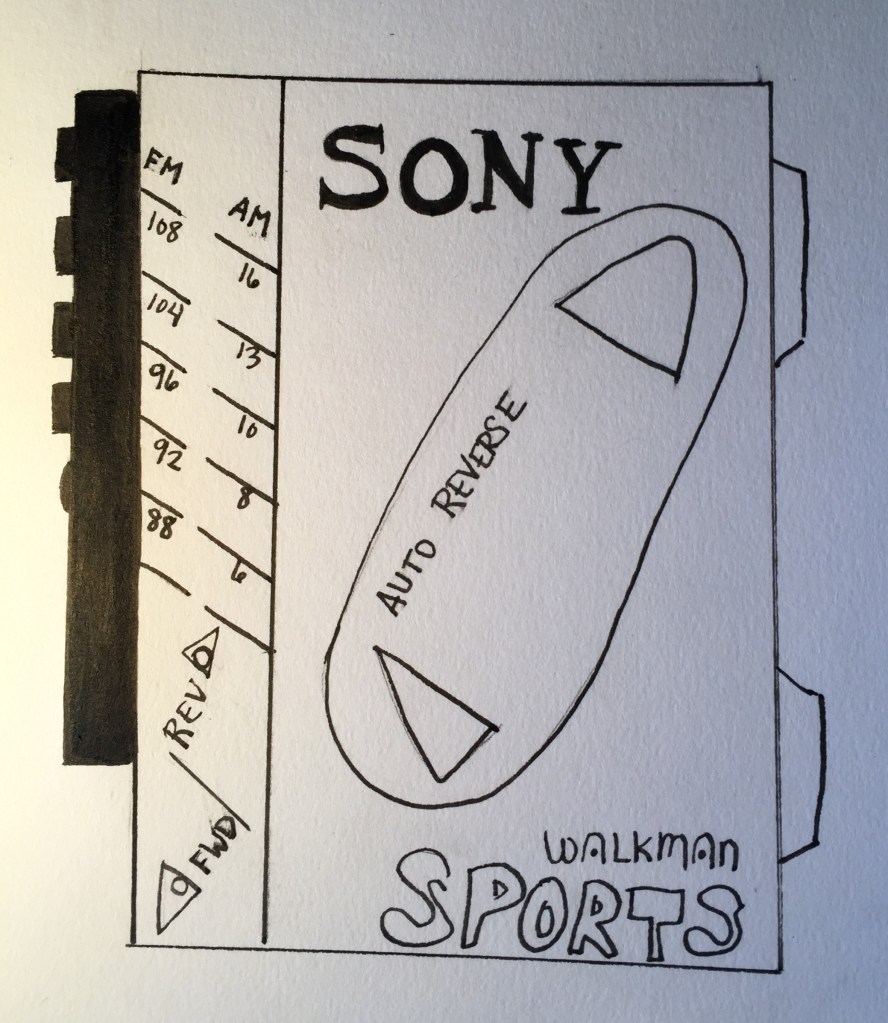
When I was in sixth grade, the only technologies to distract me were the TV and radio. I received my beloved yellow Sony Walkman years later. But even then, in order to make a mix tape, I had to listen to the radio on my boombox and catch my favorite song, hit “record” and “stop” at just the right time.
Now, the barrage of sounds and images are relentless. You can hear the voices of your peers night and day from your phone. You can catch your favorite TV or film or YouTuber or musician 24/7. Filters and editing programs make everyone look slim, smooth and shiny.
And if you’re one of the very few who does not own a phone, you might be ostracized. You are deemed too poor or your parents are too strict. You’re square (do they say that anymore)! Regardless, laptops are ubiquitous. The temptation to enter fantasy land is everywhere.
I just completed reading Eric Barker’s “Barking Up the Wrong Tree.” The book is a compelling read, replete with interesting anecdotes and scientific data to back up his various assertions regarding personal success. One of the most important tips he offers is the adage “control your environment.” A closely linked axiom: know thyself.
The most successful and productive people practice this. A few examples:
disconnect from the internet while working;
place cell phone in the other room;
never keep junk food in the house;
never hit snooze – get right up (!);
work before pleasure;
and so on.
I remind my students that “success” – whatever they define it to be – is within their reach. But they must make a commitment to it and do the necessary work.
Now, more than ever, knowing oneself and taking actions to ensure meeting one’s potential might be the most challenging – yet important – task at hand.
Before you resolve to start an endeavor (or stop a bad habit), you may want to take time to reflect, first.
“Pain + Reflection = Progress (Ray Dalio)”
What worked for you this year? What didn’t? What did you do fantastically well? What could you have improved? What pains did you endure and what did they teach you?
Goals and resolutions are like seeds. Under proper care, they will germinate.
The cue could be “morning”, the routine could be going to the gym and the reward could be a bubble bath (I don’t advise chocolate cake).
Remember, good habits are invaluable: they help you reach your goals on autopilot. If you don’t have to struggle to do the work because it is a habit, the more likely you’ll stick with it!
When my daughters were six and seven, I realized something shameful.
I had a tummy paunch and was telling myself it was post-pregnancy fat. Yep, six years after giving birth, I excused and denied my mottled middle.
My moment of reckoning occurred at a Cold Stone Creamery of all places. We were eating our favorites: Ava with her Chocolate Devotion, Josie with her Strawberry Blonde and me with my Coffee Lovers. Boy, were we having a great time!
Before I get further with this story, I want to make something clear: there is nothing wrong with love handles or a bit of pudge. As long as YOU’RE OK with it. I was not OK with my weight. I wore loose clothing and felt badly when I undressed. It’s just me….I feel best about myself when I am fit. I have a small frame and I feel uncomfortable with excess pounds. This is not a judgment about other people. It’s about me confronting something I was unhappy about and how I changed it.
Continuing…We got up from the table when a very fit woman walked past the window.
She walked just like this…
“Wow, she’s fit,” I said, wistfully.
“Mommy, you look good too, everywhere except your tummy.” Josie said.
As with all children, her words rang true. I had let myself go a bit. I licked the final bits of Coffee Lovers off my upper lip. I fought tears. And I sighed.
I was ready to change.
In the next year, I lost 7 lbs. and got fit again. I had more energy and I was in a better mood much of the time. How did I do this?
I simply changed my habits.
Instead of going out for ice cream, I took the girls out for walks. We didn’t stop going out for treats entirely, we just cut back.
Instead of eating when I felt bored or stressed, I started jogging and doing yoga again. BUT, I made it a habit and I rewarded myself each time. According to Charles Duhigg (The Power of Habit), this is THE key to success. I woke up an hour early every day. I put on my workout clothes which I laid out the night before. After my workout, I had a glass of water and a cup of coffee. I reveled in feeling the endorphins run through my body and my coffee became my reward. I told myself, “No workout, no coffee.” I like coffee a LOT. That was enough to keep me going.
Honestly, I believe I am in better shape now than I was 25 years ago.
Is there something you want to change? How can you develop habits to make it happen? It’s easier than you think! I highly recommend Charles Duhigg’s book, “The Power of Habit.” It’s very entertaining and informative.
Maybe you get excited about setting resolutions. Maybe you are thinking of how you are FINALLY going to change…lose weight, make/save more money, get a new job/spouse/partner.
Or maybe not. Maybe you’ve tried and failed so many times, you’ve given up.
If you are serious about reaching your goals, then you need to develop healthy habits. It’s the things you do on a daily basis that ultimately lead to the actualization of your dreams. Crash diets don’t lead to long-term weight loss. Superficial makeovers don’t lead to marriage and a lottery ticket won’t make you rich (your chances: 1 in 14 million).
It’s going to take change on a daily basis. But it doesn’t have to be painful.
Charles Duhigg of The Power of Habit discusses the surprising power of developing a small habit. He found that people who formed a small, healthy habit usually developed other strong, healthy habits.
For example, I know someone who decided to see if drinking 64 oz of water every day would get rid of her under eye circles. She drank at least 64 oz of water every day for six weeks. She didn’t notice a difference with the dark circles (dang it!), but she did notice that she was eating healthier foods and exercising more regularly which led her to sleeping better.
We’re growing various plants in our backyard, including an herb garden and, of course, cactus. My favorite desert plant is the ocotillo. I see them growing magnificently in Usery Park (where they grow wildly and without irrigation) but in my own backyard, it’s taking its time. We don’t want the branches to grow out into the pathway, so we placed tiebacks on the branches to “encourage” and “redirect” growth in our desired formation.
Tiebacks work when the plant is still supple and maturing, and the tiebacks are gentle in their support. It wouldn’t work to have harsh restraints which could harm or kill parts of the plant.
Humans have tiebacks, too. They’re called habits. As with plant tiebacks, they’re most effective when we’re receptive and “supple” and when the habits are firm, but not too harsh.
The importance of developing excellent habits in order to reach lofty goals is well-known. However, James Clear and Charles Duhigg (The Power of Habit) have studied the efficacy of habit-making and, after reading their work, I found 2 findings especially enlightening and helpful:
Habits generally take 66 days to form permanently and;
Considering making a “habit” a personal rule (“I never eat candy” or “I always workout at 6am”) for example.
Clear admits that although the (commonly held) belief that it takes 21 days for a habit to hold sounds better than 66, it’s actually inspiring to know that it takes longer. If you “fall off the wagon” within the 21 days, you know that you haven’t failed. You just get back up and continue the work.The habit hasn’t formed permanently yet. Don’t give up!
Personally, I feel a difference between saying “I want a,b,c, to be a new habit” vs. “My ruleis a,b,c.” It feels permanent and there is no wiggle room.







 Kismet