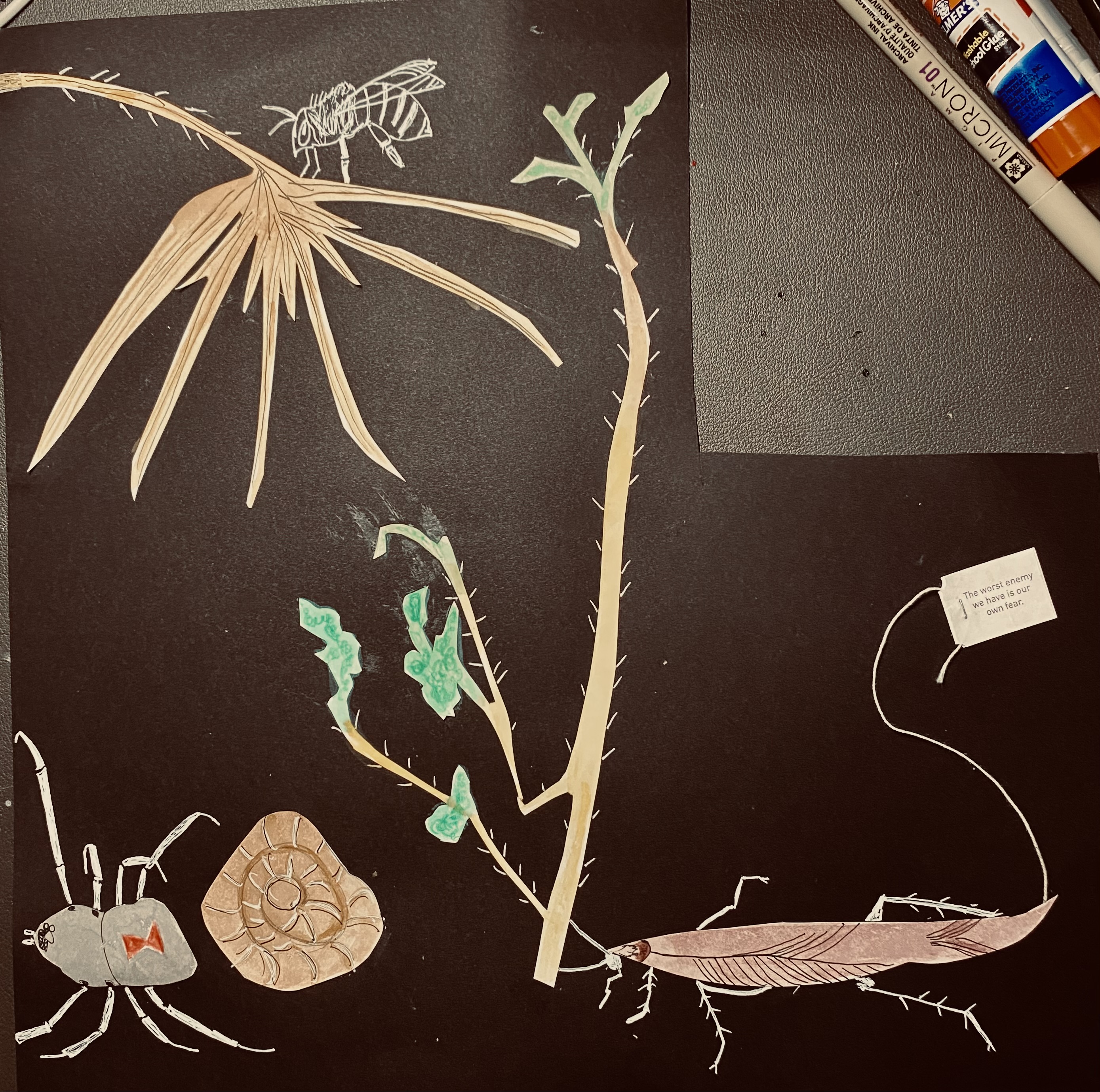
Assignment: Use natural artifacts and create a scene

“Whenever I am upset, it’s because I am upsettable.”
Eric Butterworth
My optometrist told me about his Corvette Stingray. He got it from a couple who purchased a brand new car and needed space in their garage. Everything in the Corvette was shot: the engine, upholstery, paint, some of the body was dented. They had it towed to his house.
Two years later, his Stingray is on the road. He fixed the engine himself. The upholstery still needs to be replaced, but the car has come back from the dead. The doc worked on it every weekend for two years.
Sometimes, our dreams might take years, because we “only have the weekends” to work on them. But with diligence and consistency, they WILL actualize.

Here is a continuation of my notes on Paul Tough’s research regarding “grit, curiosity, and the hidden power of character” as it pertains to children:
“Duckworth realized self-control has limitations. She believed that a passionate commitment to a single mission and an unswerving dedication to achieve that mission are more relevant when it comes to inventing something new or creating an award-winning (movie)/project. She called this characteristic grit.”
She created a 12 (now 10) question survey that turned out to be a remarkably accurate predictor of success.
It was more accurate a predictor of graduation rates for West Point than their own assessments.
Levin, Randolph, Seligman and Peterson narrowed a set of strengths that were indicators of life success and happiness:
They then created a “character report card”
Much confusion among educators regarding “character” – is it moral? Is it “performance character?”
Wealthy families may have “helicopter” parents (parents who hover over their kids as they do homework, sports, etc) but that does NOT mean they are spending quality family time together. In fact, many high-achieving, wealthy families are not closely bonded.
KIPP used to practice a lot of disciplinary action (some of which Levin regretted)
SLANT – stand up, listen, ask questions, nod, and track – taught at KIPP 5th grade
Code-switching – you must learn and practice proper behavior for the museum, college interview and nice restaurants
Rich kids at Riverdale wear casual clothes and slouch
Kids at KIPP are taught to have good posture and track teachers…formal speech
The administrators of both schools disagree on this point – what should students be taught?
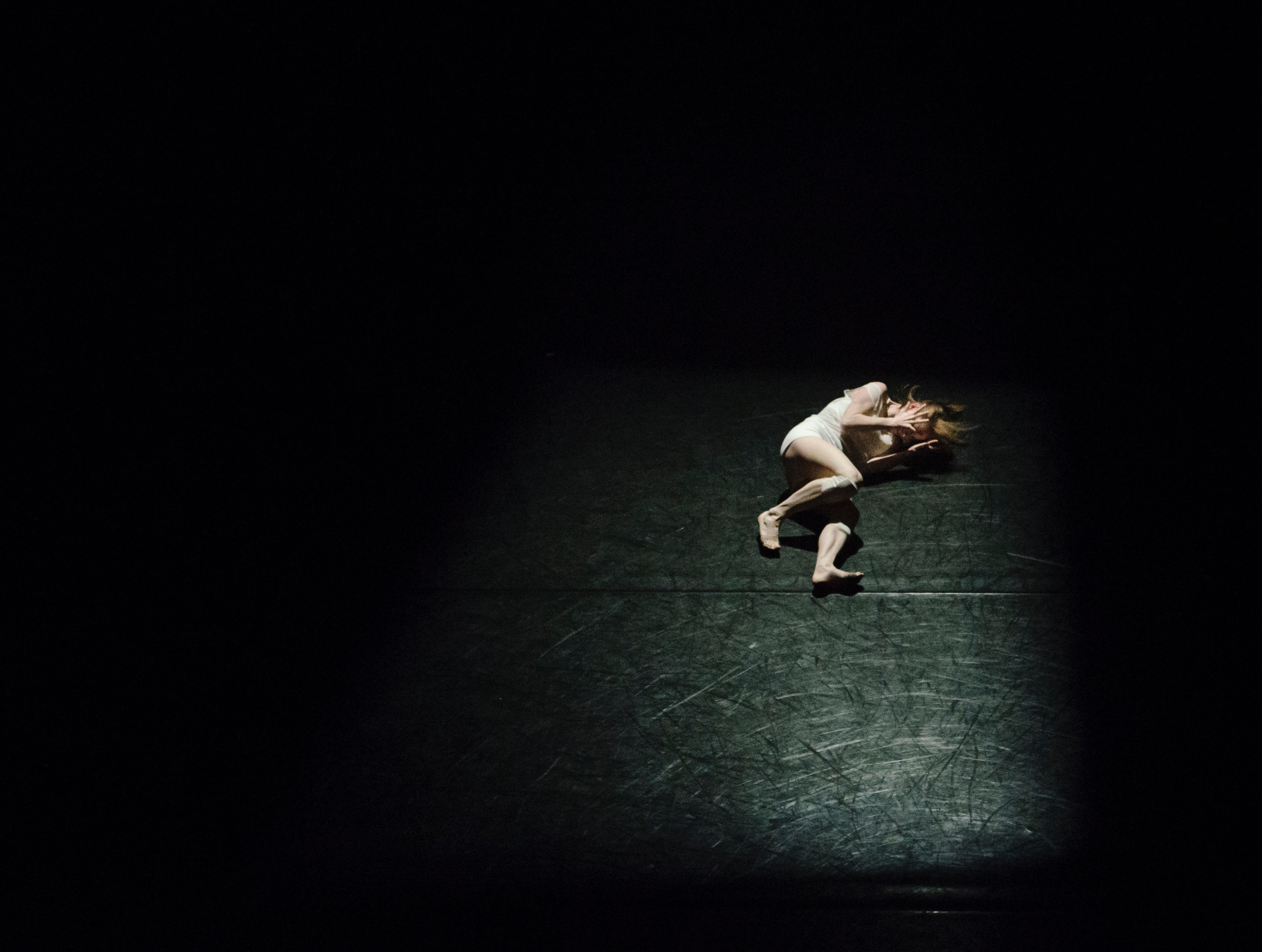
I was ten and at a slumber party. My parents rarely ever let me spend the night at a friend’s house, so I was thrilled. We had pizza and a pillow fight. As it got late, one of my friends put a large paper boat on top of her head. It looked like a Vietnamese rice paddy farmer hat – a coolie.

She bowed and said,”Ah so!” Everyone laughed. They thought it was funny. I got angry. I was the only Asian girl there.
Now, decades later, I know that anger is a symptom of sadness and pain. I was hurt because what she did made me feel like an outsider, I felt different from them. But did she mean to do that? No. The pain I felt is what I caused because I assumed (at first) that she was being malicious, but she wasn’t. I projected my feelings and beliefs on her.
If you are suffering (worried, angry, sad, insecure, jealous, etc.), you are causing yourself pain. You are choosing it. I know it sounds over-simplified and not entirely true, but it is. Mental illness aside, if you’re wallowing in self-pity or proud to be a road rager, you’re choosing it.
You can choose to be at peace instead.
“Do not take anything personally.”
Don Miguel Ruiz, The Voice of Knowledge
Ruiz explains further, “Whatever happens around you, don’t take it personally… Nothing other people do is because of you. It is because of themselves.”
What a shame it is to take what others say personally. You cannot control what others say to you or about you. And they don’t even really know you. So why bother?
When I was a teenager, my sister, brother and I studied Tae Kwon Do with the late, great Chung Kim. It was one of the most challenging endeavors I’ve ever done because the studio was very “old school.” Classes were not designed to entice kids to join and have a “good time.” It was all about self-discipline and focus. We had to do knuckle pushups if we made a mistake. We free sparred grown men. We practiced, breathed, and lived according to the tenets of CIPSI:
Courtesy (respect)
Integrity (ethics)
Perseverance
Self-Control
Indomitable (unconquerable) Spirit
I remember the physical pain of knuckle push-ups, sparring, and sit-ups. I remember silently crying because I failed a belt test or failed at something else. It was more painful than not. It was more frustrating and frightening than not. But in the end, my siblings and I earned our 1st degree black belts.
There was a hearing impaired couple – man and wife – who were practicing in the studio. I watched them, mesmerized. It was already so hard! How did they do it? People are amazing. If person set goals and believe 100% in themselves, they will accomplish their goal. I saw this first hand in the dojang and I see it every day in my students.
Every important lesson I’ve learned in life bloomed in that stinky studio. Focus on what you’re doing. Control your mind and your body. Visualize your goals. Work hard. Never quit.
Never quit!
Master Kim, thank you for leaving such a valuable legacy.

When you are in the presence of a person who speaks his mind freely, spontaneously and thoroughly (often inappropriately) we say, “He has no filter.”
This is often a problem in the classroom when there are 34 students and the teacher has numerous goals she wants to achieve. The outspoken person not only takes up valuable time uttering words that have little to no value, but it can distract other students and take them off-task.
It often causes drama.
That student can filter his words, but it requires self-awareness and self-discipline.
We can ALL filter our minds. We are in control of what we choose to read. We are all, each, in control of who we socialize with and, to some degree, who we engage with at work. You can choose to read the news and get upset or, you can choose to opt out.
But how will I stay informed? How will I continue to participate in my world?
To which I ask, “Are you truly engaging and participating in the world when you read what inflames you and then complain about it?” How about doing some volunteer work? How about starting a rights group? How about writing letters to your state representatives?
There will things you see or hear that you do not like. This is when space is helpful.
Filter your world carefully and you will see a change for the better.



 Kismet