Funny How the Mind Works

I’m taking painting classes through Creativebug.com (Lisa Congdon!) and last night, right before bed, I painted this:
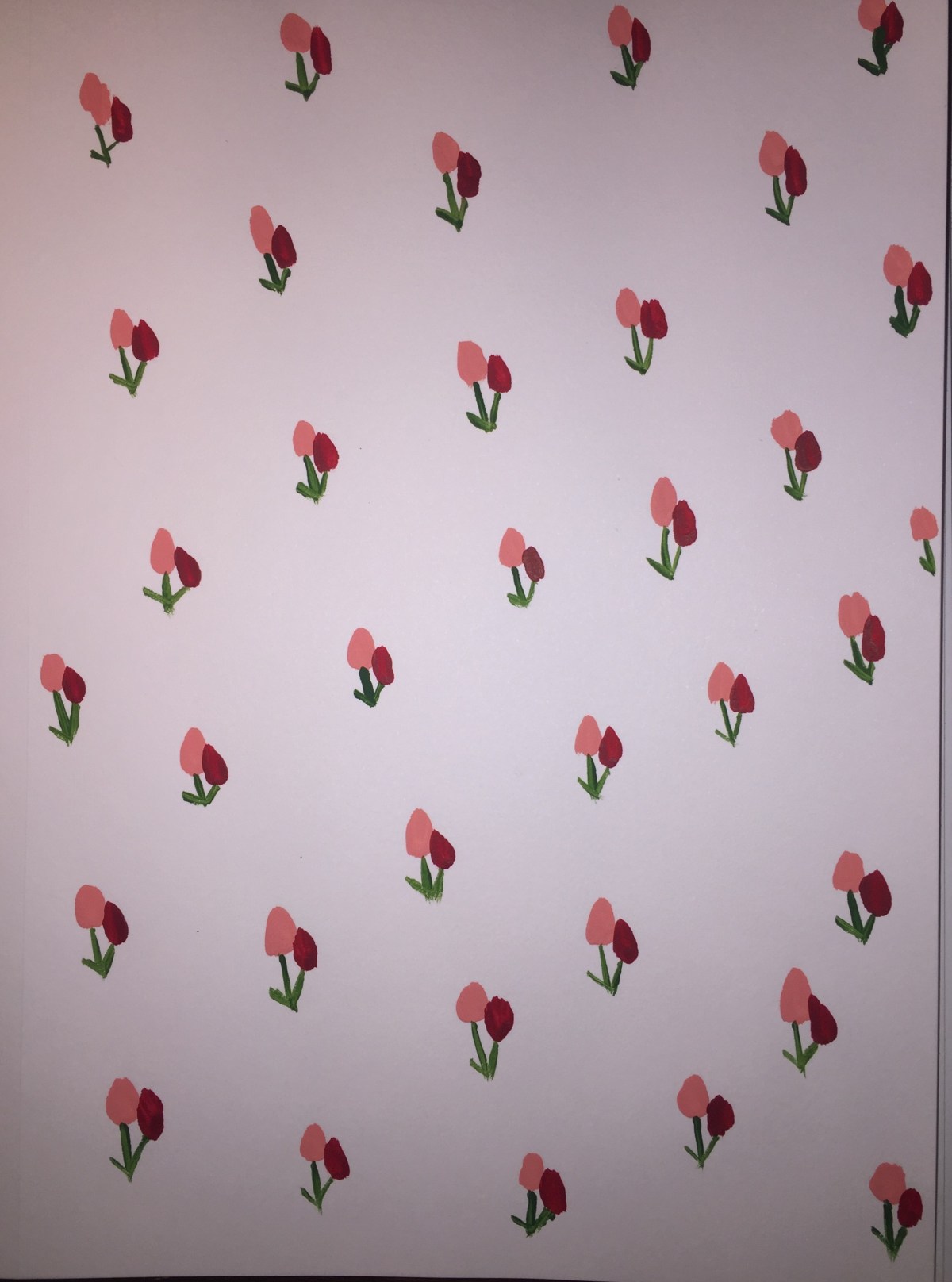
IMG-1044

I went to bed and when I woke up, I thought of a vintage dress a friend gave me over twenty years ago. It’s stored in a closet in my office – and I never look at it. Yet something evoked a need to look at the pattern:

IMG-1043

Voila!

It makes you realize how your brain is working while you sleep. I notice that whatever I think about right before I go to bed is clarified somehow when I wake up. This is why watching informative and inspiring programs before bed is better than watching news…this is why reading a good book is better than arguing…and this is why asking yourself “How can I solve this problem?” is a better question than “Why me?”
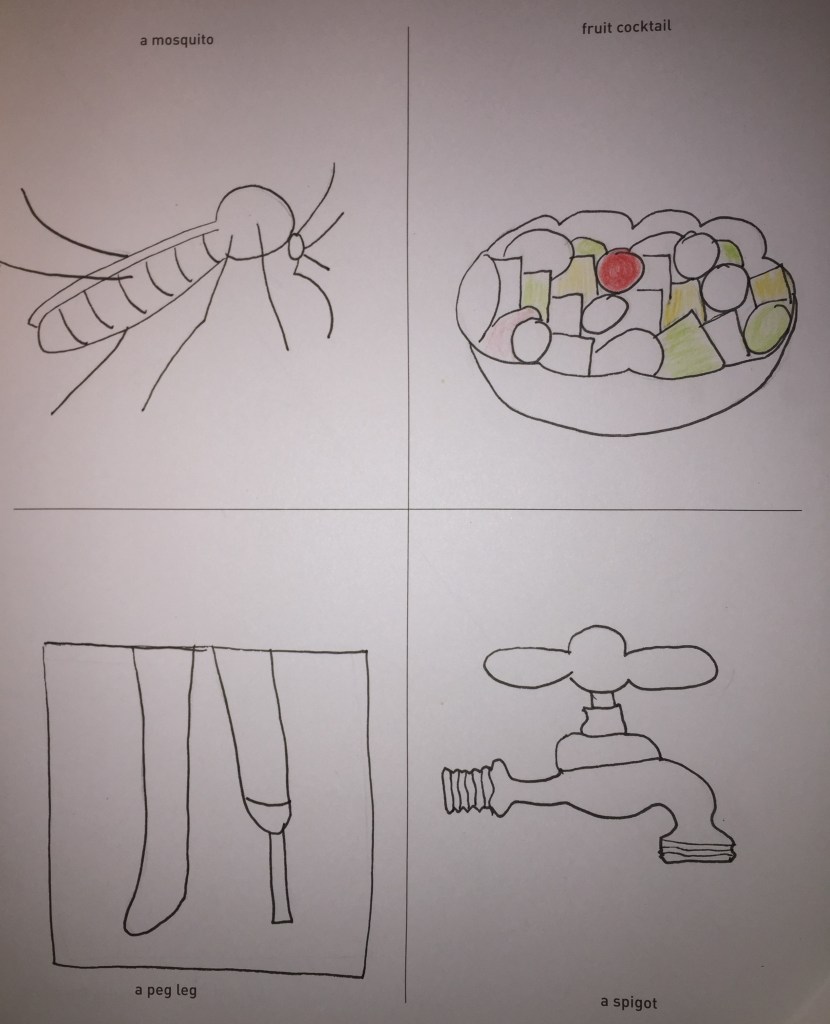
 

Doodles + Four Facts

IMG-1041

Mosquitos – Malaria, transmitted by mosquitos, kills nearly one million people in the world every year. www.Nature.com.

Fruit Cocktail (the Del Monte variety) used to include alcohol (!) but Prohibition er…prohibited that. Frugality led to fruit cocktail as “spoiled parts” of fruit were cut around to save the good parts. Voila! Fruit “cocktail.” www.thekitchn.com

Peg Leg – The first use of peg legs go back to the 1500’s: Francois le Clerc, known as the first pirate with a peg leg. (www.thepirateking.com)

Spigots – Invented as early as 1700 B.C.! www.plumbinghelptoday.com


Pomegranate Blossoms

IMG-1038
Just don’t get pomegranate juice on your white shirt!

Pomegranates are “among the healthiest of all fruits” according to healthline.com.

One of the most important nutrients they contain are “punicalagins.”

Punicalagins are extremely powerful antioxidants found in the juice and peel of a pomegranate.

They are so powerful that pomegranate juice has been found to have three times the antioxidant activity of red wine and green tea (3).

Pomegranate extract and powder is typically made from the peel, due to its high antioxidant and punicalagin content.

-Healthline.com on pomegranates

Your Checking Account

IMG-1030

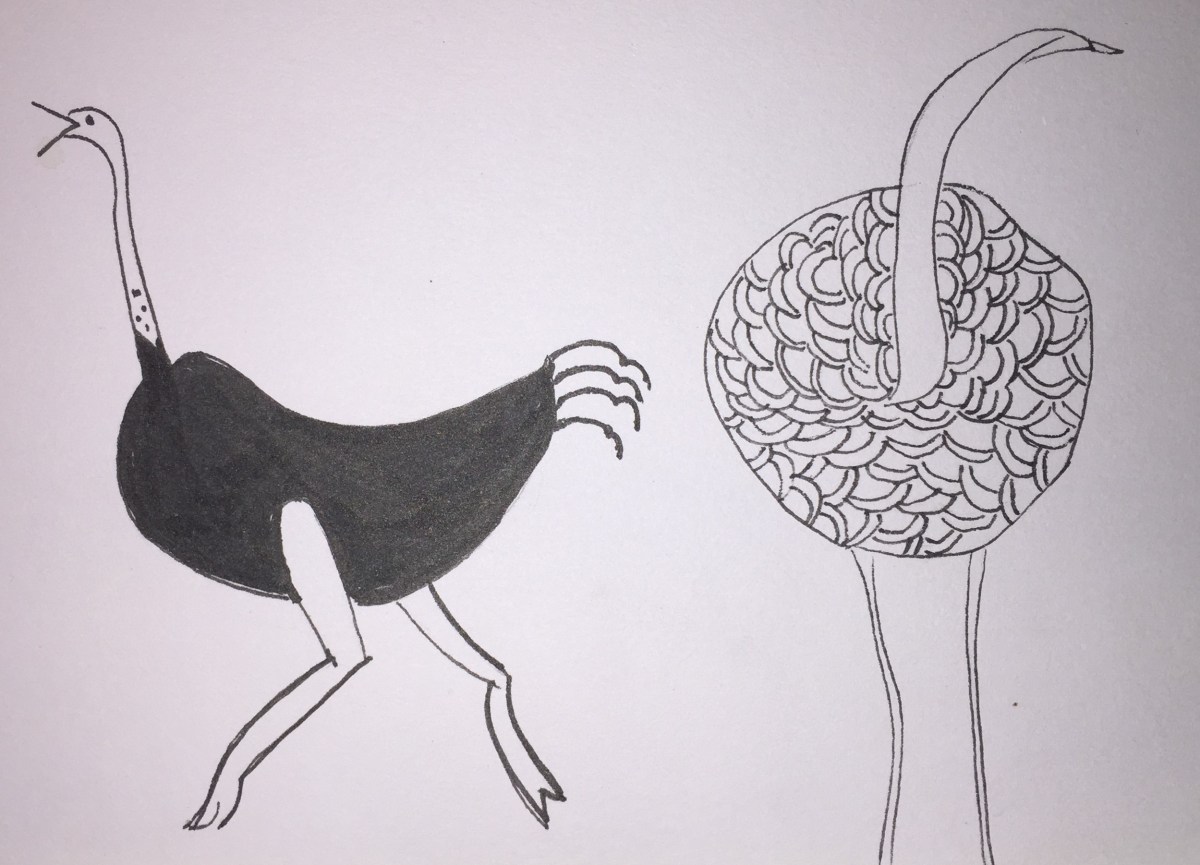
The poor, misunderstood ostrich!

The “head in the sand” saying originated as a reference to ostriches hiding their heads in the sand. It alludes to a belief that if you can’t see a predator, they can’t see you. Or, more figuratively, that you refuse to see a problem. However, ostriches do not do that. They lower their heads to eat, but they don’t hide in bushes or in sand.

Another misfortune for the ostrich: though they are birds, they cannot fly.

However, they have such strong legs, that they can kill a lion just by kicking him! (Kids National Geographic) In running, their stride can be as long as 16 feet and – they are the world’s fastest land animal.

Did you know that the ostrich’s eye is the largest of any land animal? (awf.org)

I listened to a podcast the other day. One sentence big takeaway: “If you want to know where your priorities are, take a look at your checking account.”

I realized I spend quite a bit on groceries and dining out. I love animals and I want to help, so I just made a donation to the African Wildlife Foundation. They are accredited by the BBB. I invite you to consider acting on your “priorities.”

Locals: There will be an Ostrich Festival in Chandler, AZ March 9 – 11!


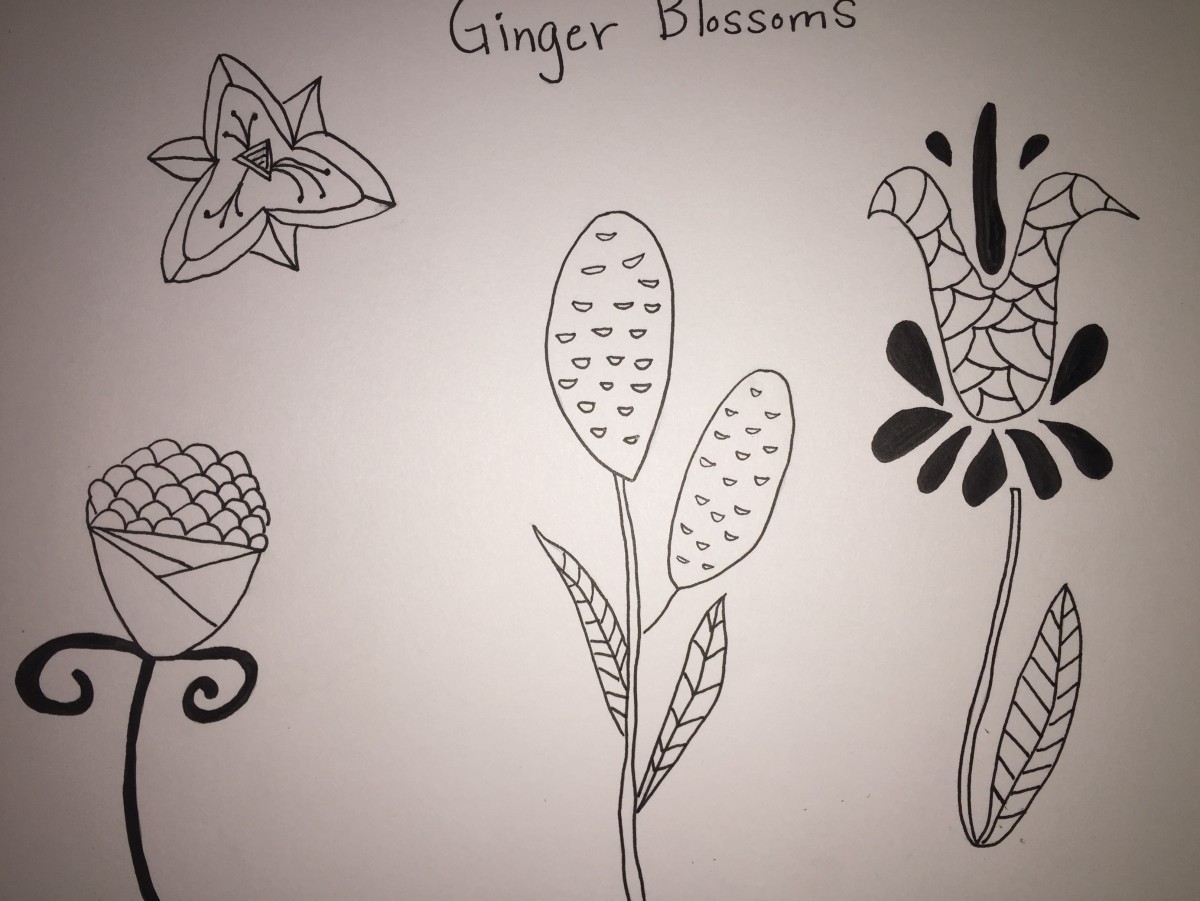
Aphrodisiac? Tummy Relief? Anti-Inflammatory?

IMG-1019

Is there a food item that can do all of these things?

My daughter has GI problems and when she has ginger tea, she swears it helps.

Ten facts about ginger*:

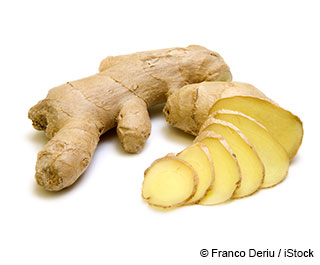
  1. Ginger is actually a rhizome, not a root. A rhizome is an underground stem.
  2. The ginger plant is an herb.
  3. Ginger is a part of the Zingiberaceae family, which also includes turmeric and cardamom.
  4. Ginger is native to southeastern Asia.
  5. You can grow ginger from rhizomes found at grocery stores.
  6. Mature ginger rhizomes, ones most commonly sold in grocery stores, are harvested after 10-12 months.
  7. Ginger is popularly grown in warmer regions and the tropics.
  8. Ginger can be cultivated all year round. However the best time to plant them is at the end winter and early spring.
  9. A ginger plant can grow up to 4 ft. tall.
  10. Ginger has MANY health benefits, some including ant-inflammatory properties, blood sugar regulation, and gastrointestinal relief.

ginger-nutrition-facts

*from https://thatsitfruit.com/blog/10-interesting-facts-about-ginger/


So Diverse!


IMG-1009

I looked up images of plankton for drawing and then I read about them. I learned that they are classified not by taxonomy (as so many other animals are), but by ecological niche! There are numerous types of plankton – both microscopic as well as macro.

I decided to use acrylic paint for the “luminescent” factor. I have much to learn about using this type of paint. I’m taking a Lisa Congdon class on watercolors/gauche through Creativebug.com (“The Daily Painting Challenge”). It was $10 for 30 mini lessons on pattern-making: a great deal!

IMG-1010
First Four Days of The Daily Painting Challenge

Not sure where I’m going with this art, but I am enjoying the process.