Self-pity. You can be there in a matter of seconds. Grieving is feeling sorry for yourself, because your dog is no longer around to show you unfiltered, undiluted affection. You still expect her to come running to you when you return home from work…shopping….a night out at a restaurant. You miss her quiet presence next to you while you type on your computer or read in bed.
Your dog is fine, she is no longer in pain. The cancerous tumor growing under her tongue and in her gums, pushing her tongue out the right side of her mouth can no longer hurt her. But you, you are left with loneliness and guilt. Why didn’t you stay home with her more? You should have walked her more often. You never took her to the dog park. Remember, you didn’t want her to catch any diseases, that’s why. Maggie was always the Beta dog. Cats were Alpha dogs compared to her. She quickly acquiesced to others. She hung her head low, shoulders cowered. She never harmed a thing. She could have been attacked at the dog park. You meant well.
When the kids were 3 months and 19 months old you took them and the dog for a walk to the post office on Mission Street. It was a daring undertaking with the infant in the Baby Bjorn, the toddler in the stroller and the frisky pup on a busy street, but you were going stir crazy with the diapers, the fog, and the boredom. You tied the puppy to a street sign post with a cement base. Just a few minutes in line and someone yelled, “There’s a dog running down the street with a post attached to her leash!” You looked outside and your dog was gone. You rushed home with two girls, not three. You cringe, expecting to hear screeching tires, screams. But they never come. You fight back the tears. You can’t lose her. When you get home, she is there, she took a different route, but somehow found your house. You are relieved and furious.
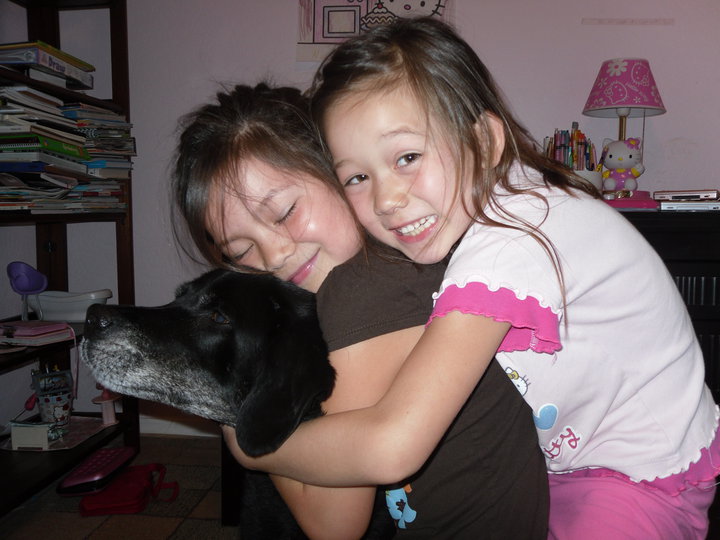
You miss her so much. The white snout, those sad eyes, even the stench of her infection. You miss those silky ears, the low growl of contentment she gave when you rubbed them. She jumped a foot off the ground when you came home. When you were recovering from your radical mastectomy, she napped next to you, choosing you over the rest of the family. Somehow, she knew you needed to rest. And while you worried about recurrent cancer, hers grew silently.
 She loved bulgoki. Tennis balls. Hikes in the desert. She hated water. She would fetch when the mood fit. She was infinitely patient with children and other dogs. She was awesome.
You knew the end was near when she couldn’t eat. She loved to eat. And then she couldn’t drink water. Blood oozed from her infection, the antibiotics didn’t seem to have any effect. She drooled a thick, bloody mucous and you wiped her gently, frequently, sadly. How do you know when the time has come?
She was on the table, injected with a sedative. She looked so peaceful, striking her usual pose with one paw over the other, her eyes getting sleepy. You were grateful to see her comfortable. You told her you love her over and over again. Her eyes never left you. You bawled. The lethal injection worked quickly. You heard your husband say, “It’s OK, Maggie, you can go.”
And she’s gone.





 Kismet