Happening now: six teenagers in our dining room, jamming on violins, viola, and cellos. They love playing together so much, that they arrange to meet weekly…driving almost one hour one way to each other’s houses. Proactive and unpaid.
Here they are during a concert in July:
Who says kids these days are just on their phones?
In training our new dog to like her crate, I randomly place tasty treats inside and keep the door open. When we first got her, she refused to go in – most likely because it reminded her of the kennel where she lived with hundreds of other dogs.
But quickly, she grew to associate her crate with treats. Only happy things happened there: some peace and quiet, a warm bed and chicken jerky.
We can do the same for ourselves. We can create positive associations to activities and places that are good for us that we might not feel so great about right now.
There are a group of cyclists that ride by my community every morning around 5:30 a.m. Most likely, they don’t think Ugh, have to wake up early and go riding again. Instead, they might associate this activity with camaraderie, friendship, and a feeling of vitality.
The ultimate power lies in knowing how to train ourselves to be better.
I watched the scene regarding baselines from “Blade Runner” the other day. I started thinking about society and laws and citizenship and what true self-determination might be. What is patriotism? Citizenship? What are our obligations and how does the individual contribute to the mass?
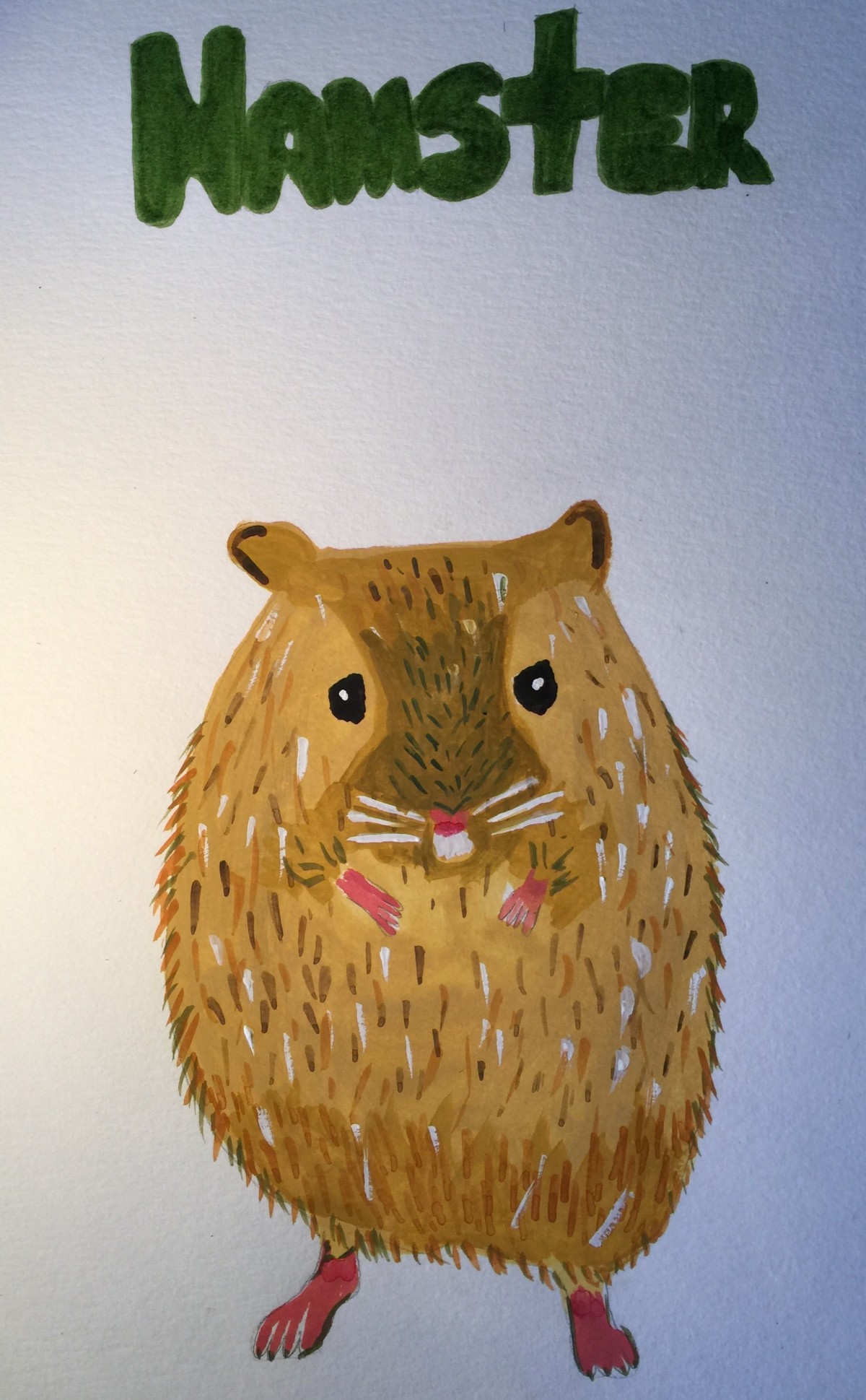
To run on a hamster wheel means to do things without thinking and without an end in sight. It’s a lack of presence.
“How can you tell if you’re on The Hamster Wheel? Your focus narrows and becomes singular. You get reactive instead of proactive. You’re not breathing deeply. Your shoulders are tense. Your jaw may be gripped. Your heart is beating fast and you feel frantic. You experience chronic fight or flight syndrome, your adrenaline is pumping like crazy. You stop really ‘seeing’ people and they start to become objects.”
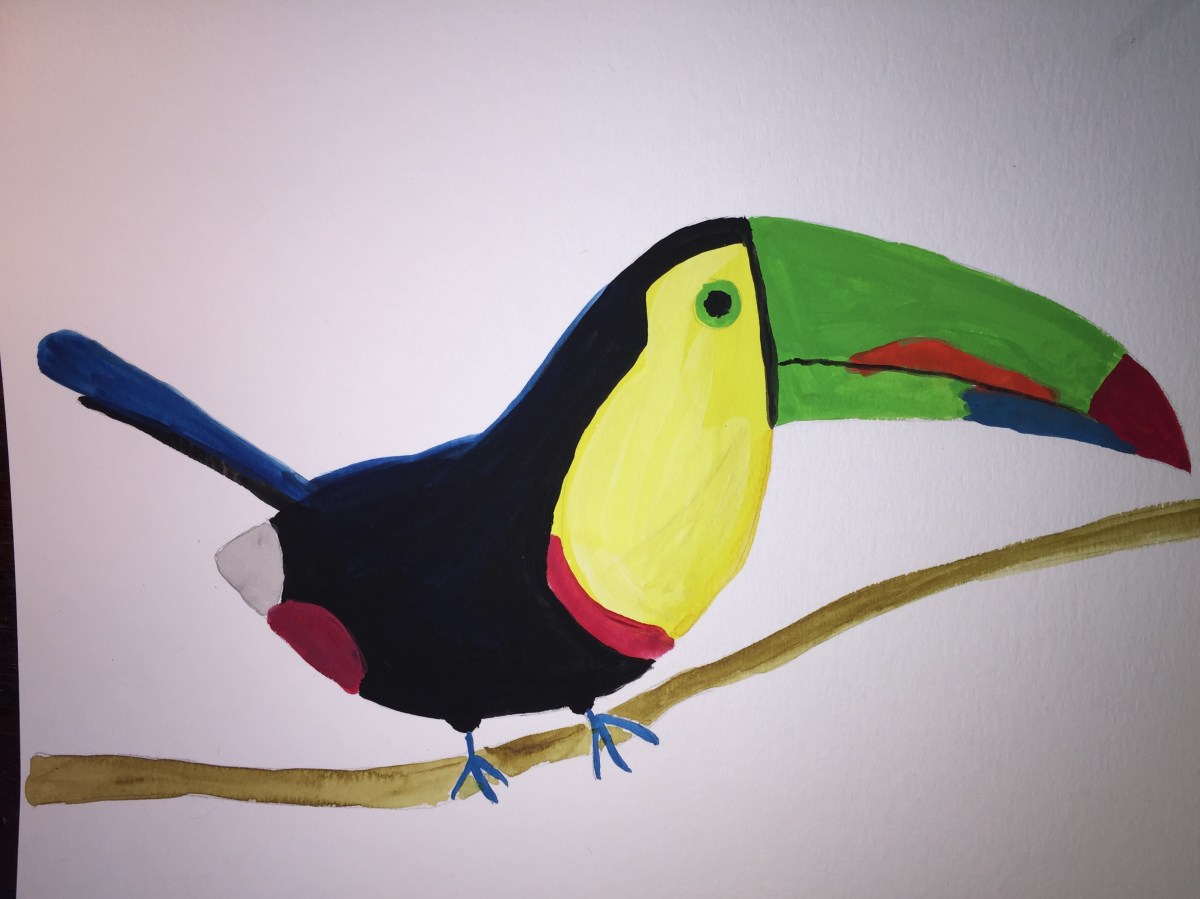
Did you know that their beaks are “honeycomb-like” (lightweight) and virtually useless as a weapon? But the other animals don’t know that!
Tip of the Day (from personal experience):
Start your day with something that is hard to do physically…something that requires you to push yourself. Achieving it first thing in the day will give you a sense of accomplishment and vigor for the next 15 to 18 hours.
Listening to Oprah’s podcast with will.i.am, I was profoundly impressed with him not only as a musician, but as an education proponent. His i.am.angel foundation brings STEAM (science, technology, engineering and math) programs to under-served communities. This foundation has also awarded over $800k in scholarships and 97% of these students are the first in their families to go to college.
Will echoes Milton Berle’s sage advice:
If a door closes, build a new door.
This reminds me of something that happened a few weeks ago, when I was reading the Red4Ed message board. A school bus driver wrote: “Are you guys (teachers) demanding a raise and better benefits for us classified staff?”
I see way too much self-medicating and not enough self-advocating these days. Don’t ever assume someone is looking out for you. You’ve got to do the heavy lifting yourself. Exercise your rights. Vote. Do something with what you have.
If you go by the usual quote, “When one door closes, another opens,” it assumes you will just wait for another one to open. When you build your own, it won’t ever close.
I just finished listening to a Rich Roll podcast. His guest was Jesse Itzler who wrote a best selling book about Living with a (Navy) SEAL. Itzler is also married to Sara Blakely who founded Spanx.
Pursuing outrageous physical feats is not my bag. However, I like to keep learning about motivation and what might help others (as well as me) get/stay motivated to constantly improve (work, relationships).
The biggest takeaway from this podcast for me was to “circle a date in the future” for a goal I have in mind and then to tell everyone about it to hold myself accountable. As soon as I published “Esther, Mia and the Stars,*” I wanted to write my next book. But I haven’t. So here it is: by December 13th, 2018, I will write (and illustrate!) book #2.
What have you put on the backburner? Share it now (here or elsewhere), and get going!
*Yes, it says “Mia, Esther and the Stars” on Amazon. But it’s the right book. ;P
“Scientists consider it the single thing closest to a magic bullet….and Richard Branson gives it as his #1 piece of advice for entrepreneurs” – do strenuous exercise!
Ryan Holiday recommends having a goal with your exercise (e.g., “I will do at least 10 pushups today.”)
Although I have never been diagnosed with anxiety disorder, I know for a fact that if I start my day out with strenuous exercise, my anxiety levels are greatly decreased all day.
The author of this book, Paul Tough, did NOT graduate from college!
Tough does not fit the demographic of college dropouts: He came from a well-to-do family; and got admitted to (and briefly attended) Columbia University.
However, he was rebellious after high school (where he did very well). Inspired by Jack Kerouac, he wanted to travel and do something uncertain, unsafe…something he felt uncertain if he could succeed at. Believe he would learn more on the road than on the campus.
Steve Jobs’ famous graduation speech at Stanford (2005): Job told graduates that dropping out “had been one of the best decisions I ever made.”
allowed him to take classes he was interested in (calligraphy, typography)
this led to his creative typography in personal computers – distinguished Mac from all other computers
Biggest failure – being fired from Apple – a very public failure
allowed him to reorient himself and his work that led to his greatest successes: buying and transforming Pixar, getting married, returning to Apple rejuvenated
“The heaviness of being successful was replaced by the lightness of being a beginner again, less sure about everything.”
Paul Tough: became a magazine editor and journalist. Twenty-four years after dropping out of Columbia, Tough quit the New York Times and wrote this book.
2. LG Parenting
Remember the high and low level Licking and Grooming experiment with rats?
Paul Tough thinks about that often now that he has become a new father.
Realizes that the most reliable way to produce and adult who is brave and curious and kind and prudent is to ensure that when he is an infant, his hypo-pituitary-adrenal his functions well. How?
Protect him from serious trauma and chronic stress;
provide him with secure, nurturing relationship with at least one parent, ideally, two.
provide lots of comforting, hugging, talking and reassuring;
also provide discipline, rules, limits, someone to say “no”;
help him to learn how to manage failure;
“More and more graduates from prestigious colleges are going into investment banking and management consulting and far fewer become artists, entrepreneurs and iconoclasts. Why? Because Wall Street decision is easier…they are driven by fear of not being a success than by a concrete desire to do anything in particular.” p. 184
3. A Different Challenge
Liberals and conservatives differ greatly on how the government should aid families in poverty, but just about everyone agrees we need to do something.
“The government should guarantee every citizen enough to eat and a place to sleep.”
In 2012, the child poverty rate was 22%. This means between a fifth and a quarter of American children are growing up in poverty. (From 1966 to 2010, the child poverty rate was 15%.)
Unsurprisingly, children who grow up in poor families in the United States do very poorly in school.
If we can help poor children escape the cycle of poverty, we can help them improve their academic skills and academic outcomes.
Conclusion: We could replicate on a big, national scale the accomplishments of the schools outlined in this book and make a huge dent on poverty’s impact on children’s success.
4. A Different Kind of Reform p. 189
For a long time, educational reform was focused on teacher quality and they way teachers are hired, trained, compensated and fired.
Whatever your stance, research on teachers remains inconclusive in some important ways:
we don’t know how to reliably predict who will be a top-tier teacher in any given year;
variations in teacher quality accounted for less than 10% of the gap between high and low-performing students.
The only official indicator of the economic status of an American public-school student today is his or her eligibility for a school-lunch subsidy.
If you qualify for subsidies, you probably can’t afford adequate shelter, nutritious food, new clothes, books or educational toys. Statistically, you are likely being raised by a poorly educated, never-married single mother.
5. The Politics of Disadvantage
The biggest obstacles to academic success that poor children, especially very poor children, often face: a home and a community that create very high levels of stress, and the absence of a secure relationship with a caregiver that would allow a child to manage that stress.
Character matters: grit, resilience, perseverance and optimism.
Perry Preschool – 128 children in poverty randomly chosen to attend high-quality preschool program. Experts believe that the school gave a return between $7 to $12 for each dollar spent.
The website displays data that starting quality education for the very poor at an early age has lasting effects (through the participants’ 40s)!




 Kismet