I was in a workshop for educational leadership. We broke out into groups and were asked to list cultural values we would uphold as leaders. One group mentioned “transparency.”
“What does that mean?” Our instructor asked.
“You know…you get what you see,” one group member answered. She sounded feeble.
“Transparency. No secrets! You share everything…that includes your conversations about other people. When you talk about someone who isn’t there, you should only say what you’d say if they WERE there.”
This is when I realized I have worked in a lot of dysfunctional work environments. How would this affect your professional life? That is, if you stopped engaging in gossip? How about your personal life?
I’ve always been a bit high-strung. I’ve always been a worrier.
I used to spend more time worrying than taking action to stop the worry.
As I begin the last half of my life, I want to be a warrior.
I’m reading Tolle, Singer, the Dalai Lama and Desmond Tutu.
Bday gift from sis…
I’ve read all kinds of books and learned a lot. But I heard Elizabeth Gilbert the other day on a podcast and she said something that clicked (!)
She was talking about her writing process and she said she writes in seasons….you know, as in nature. She said something like this (totally paraphrasing): There’s the quiet (winter) phase, where’s she’s in between projects and thinking, getting inspired. Then she begins research (spring), and she writes (summer) and then does the whole marketing tour bit (fall). And the cycle begins again.
The part that struck me as shockingly KIND to herself was that she gave herself time to just think, rejuvenate, get inspired. She sees it all as an integral part of her creative process.
Wow.
You mean, you don’t have to keep working and sweating?
It made sense to me. Of COURSE, even nature takes breaks. Parts of it die in order to enable other things to grow. This applies to every career, every job, every role in life.
So yes, make your To Do lists and set goals. That is important. But be sure to take the time to relax, re-energize, and follow the cycle. Calmly get each step done. No need for stress.
The hippocampus in our brains is responsible for our learning, our emotions and our memory. As we age, we get concerned about its health.
We’ve known exercise is good for the brain, because studies have shown that exercise pumps blood throughout our gray matter, improving mood and thinking.
But which type of exercise is best?
Aerobics?
unsplash.com
Weight-lifting?
Unsplash.com
High intensity interval training?
Unsplash.com
It’s sustained aerobics!
According to Mindful.com, an experiment on lab mice in Finland showed definitively, that sustained aerobics produced the most neurogenesis.
Weightlifting is great for your muscles (and aging). High intensity interval training is excellent for calorie burning and aesthetics. But aerobic exercise is excellent for the brain. Whatever your fitness routine, don’t skip your spinning (or slimnastics or dancing or kickboxing classes)!
We were out of town for a week – back to the San Francisco area – and walked a lot. It was great spending time with family and friends, eating good food, seeing the sights.
Somehow, I hurt my back. Could have been a combination of the plane ride, tight muscles and aging. It’s not that bad, but I rarely hurt myself and found myself limping along this morning, doing five loads of laundry. The pain was so great, I understood why people take pain killers.
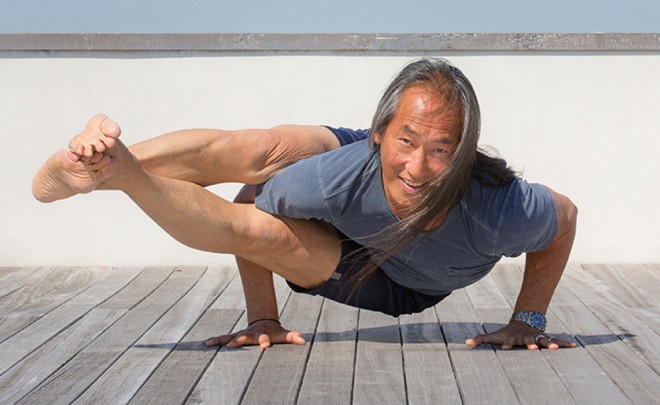
So I got down on the mat and did “front bends” with Rodney Yee for 20 minutes with his A.M. Yoga. I know, he’s not a saint in his personal life. But my back is MUCH, much better after giving some attention to it.
“Get out of your mind and listen to your body. Listen to what your body’s telling you.”
Maybe you get excited about setting resolutions. Maybe you are thinking of how you are FINALLY going to change…lose weight, make/save more money, get a new job/spouse/partner.
Or maybe not. Maybe you’ve tried and failed so many times, you’ve given up.
If you are serious about reaching your goals, then you need to develop healthy habits. It’s the things you do on a daily basis that ultimately lead to the actualization of your dreams. Crash diets don’t lead to long-term weight loss. Superficial makeovers don’t lead to marriage and a lottery ticket won’t make you rich (your chances: 1 in 14 million).
It’s going to take change on a daily basis. But it doesn’t have to be painful.
Charles Duhigg of The Power of Habit discusses the surprising power of developing a small habit. He found that people who formed a small, healthy habit usually developed other strong, healthy habits.
For example, I know someone who decided to see if drinking 64 oz of water every day would get rid of her under eye circles. She drank at least 64 oz of water every day for six weeks. She didn’t notice a difference with the dark circles (dang it!), but she did notice that she was eating healthier foods and exercising more regularly which led her to sleeping better.
The final tip Daniel Pink offers in his book Drive is to Create Your Own Motivational Poster. I know, it sounds lame, but I played around with it and it’s incredibly fun.
Here is a smart and simple exercise for assessing whether you’re on the right road to autonomy, mastery and purpose in your life from Alan Webber, Fast Magazine cofounder.
Get a few index cards. On one card, write your response to this question:What gets you up in the morning? On the other side of that card, write “What keeps you up at night?”
Keep each answer to one sentence. Stop when each gives you a sense of “meaning and direction.” Now you have something to use as your personal compass. Check in to see if they remain true. If not, ask yourself what you’re going to do about it.
Pink, D. H. (2009). Drive: The surprising truth about what motivates us. New York, NY: Riverhead Books.
Tip #6 from Daniel Pink’s Drive cannot be overstated: Just say no. Pink informs us that management guru Tom Peters creates a “To Don’t” list. These items zap energy and time away from goals.
In today’s fast-paced, highly-distractable world, staying on point is an obstacle in and of itself.
“What you decide not to do is probably more important than what you decide to do.”
Pink suggests that you get unstuck by “going oblique.” In the 1970’s, Producer Brian Eno and artist Peter Schmidt created a deck of cards that contained strategies to overcome stress and being “stuck” creatively. They called it “Oblique Strategies.”
You can purchase this deck of cards for $500 or used ones for $65 or you can get some great examples for free, here.
I think the bottom line is to “jolt” you out of your rut.
Maybe a deck of cards containing oblique strategies doesn’t do much for you.
For me, visiting an art gallery or going to a live music event will inspire me to “break the walls” to creativity. Perhaps reading the biography of someone you admire will do it for you, or maybe a weekend trip to a cabin with no technology.
It will be different for everyone. Just make sure it’s in your arsenal of tools for work.





 Kismet